

Indirect Fire from Anti-Tank Guns
A pamhlet from 1943

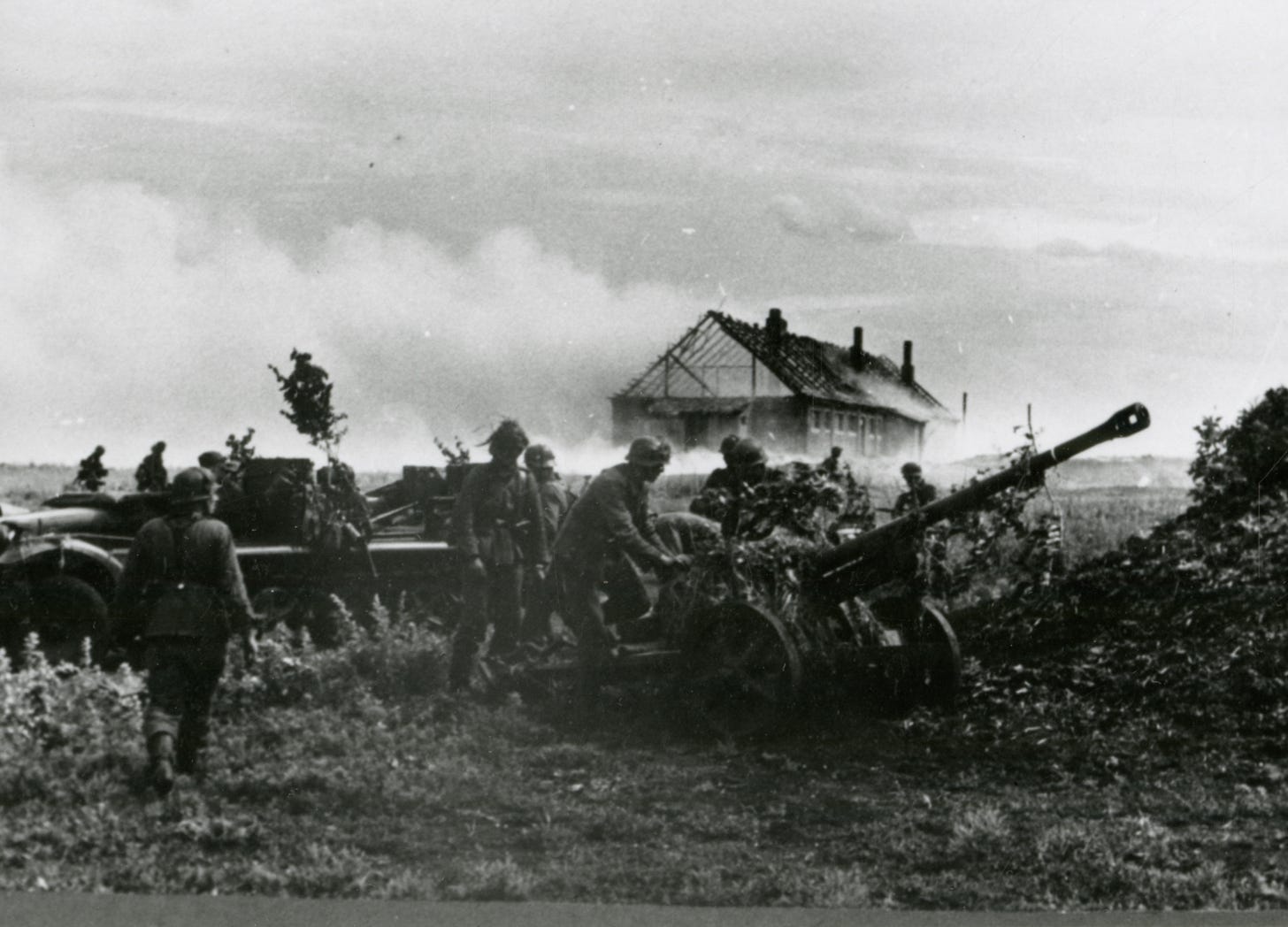
Recently, while cleaning up some files, I ran into a booklet called The Employment of of Heavy Anti-Tank Guns in Indirect Mode. Dated 1 September 1943, this pamphlet provided what it promised on the cover: a set of techniques for using weapons designed for shooting at armored vehicles as if they were field pieces.
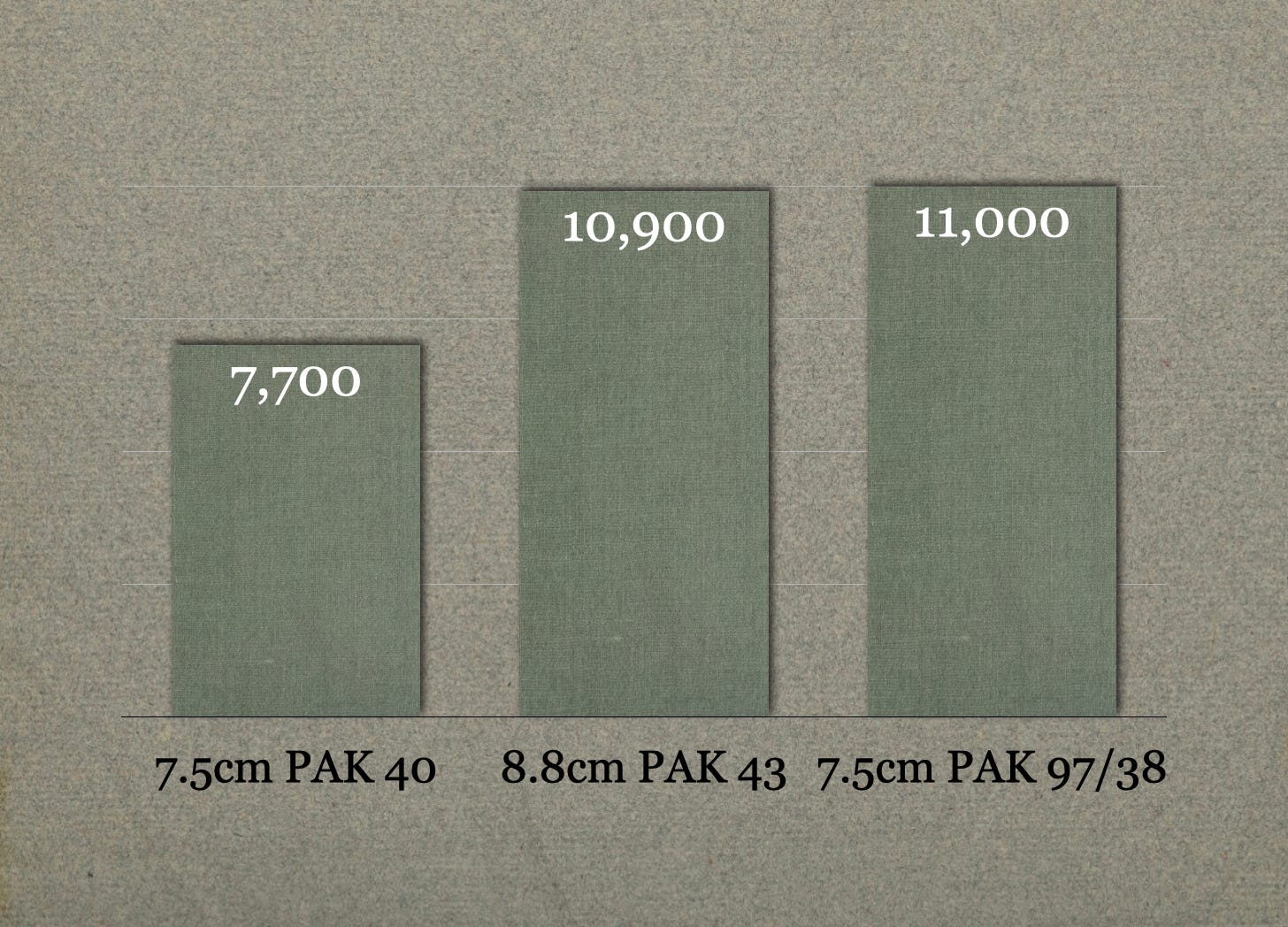
The most obvious difference between the two methods of employment lay in the realm of range. When fired in the conventional manner, a shell shot from an anti-tank gun might fly for a mile or so. When, however, the crew raised the barrel of the weapon, reduced the size of the propellant charge, and did a bit of arithmetic, the same projectile could travel for six miles or more.
As might be expected, the descendants of field pieces proved especially well-suited to indirect fire. Thus, when supplied with the right sort of ammunition, the 7,5cm Panzer Abwehr Kanone (PAK) 97/38, which got most of its elements from the famous ‘French 75’ of the First World War, could shoot further than the 7,5cm PAK 40, which had been designed, from the ground up, to knock out armored vehicles. The repurposed field gun could also hold its own against the 8,8cm PAK 43, a much larger weapon which began its journey as a duel-purpose (anti-aircraft/anti-tank) piece
.
Sources
Merkblatt über den Einsatz der s. PAK im indirekten Richtverfahren mit dem Aushilfsrichtmittel 38 (Pamphlet on the Employment of of Heavy Anti-Tank Guns in Indirect Mode with the Aid of Model 38 Supplemental Sights) (Putlos: Schiessschule der Panzertruppen, 1943) US National Archives, Microfilm Series T-283 Roll 54
The video, which shows an 8,8cm dual-purpose gun delivering indirect fire, comes from German Weeks Review, a film I found on the website of the US National Archives. (As far as I can tell, the program was assembled for eventual publication as part of the weekly newsreel Deutsche Wochenschau.)
Related Reading


Just as reconnaissance elements should not be in reserve, unless resupplying, neither should artillery of all flavors. Clearly the Wehrmacht had the same idea as the US Army did. Dr. Chris Gabel and Steven Zaloga have noted in Seek, Strike, and Destroy: US Army Tank Destroyer Doctrine in World War II (Leavenworth Papers 12) and US Anti-tank Artillery 1941-45 (NV 107) the extensive use of anti-tank artillery in the indirect fire mode. When you think about harassment and interdiction fires, high velocity artillery fire can certainly augment a force’s total efforts.