

Burners, Blasters, and Bazookas
Assault Platoons of Infantry Battalions 1944-1947

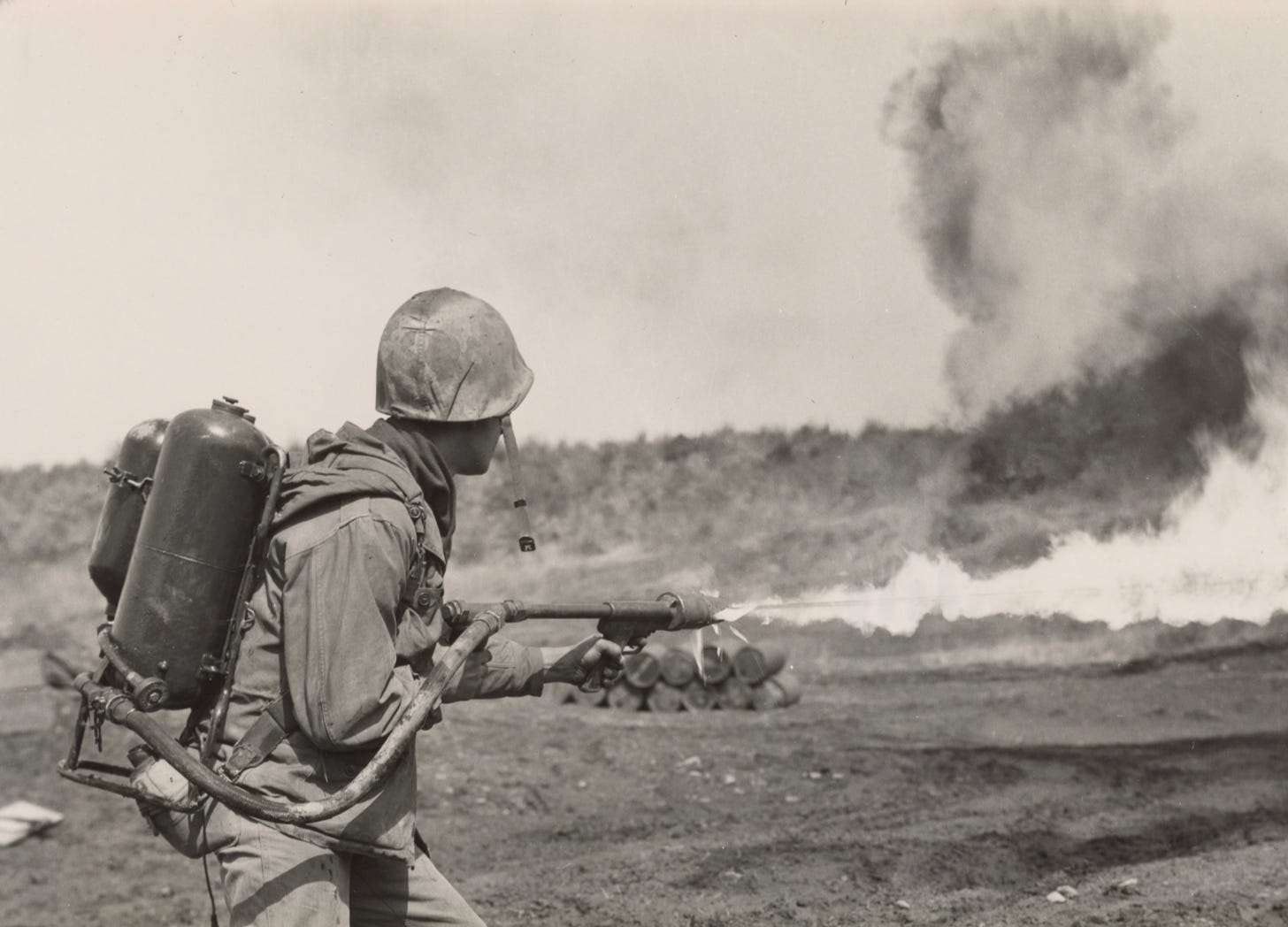
In 1942 and 1943, very few Marines used flamethrowers. The E-Series establishments, which governed the structure of the operating force for most of the second full year of the Great Pacific War, allowed each Marine division a grand total of twenty-four backpack-mounted weapons of that class. None of these, moreover, could be found in the arsenals allocated to infantry regiments, let alone infantry battalions. Rather, all twenty-four flamethrowers in each division belonged to its combat engineer battalion.
Reports written by veterans of the island battles of 1943 convinced the authors of the F-Series tables of organization to provide each infantry battalion with twenty-seven portable flamethrowers. However, rather than creating a unit that specialized in the care, feeding, and operation of such devices, the organizational architects called for them to be issued, on an ad hoc basis, to existing rifle squads. Thus, the number of backpack flamethrowers allowed to each battalion corresponded, exactly, to the number of rifle squads that it rated.
When not in use, the flamethrowers could be found, along with other weapons of the cave-clearing, bunker-busting persuasion, in the transportable arsenal of each rifle company. This ‘company weapons pool’ held nine flamethrowers, nine rocket launchers, and nine demolition kits. In other words, this reform gave each rifle company the means of simultaneously transforming each of its nine rifle squads into a self-contained assault unit.
In practice, this system fell afoul of the peculiarities of flamethrowers. For one thing, operating a sixty-eight pound (thirty-one kilogram) weapon that spat burning napalm required and attracted a great deal of unwanted attention required a particular combination of skills and aptitudes. For another, the process of refueling flamethrowers, which included the ‘aging’ of the mixture, required several hours.
During the battle for the island of Peleliu (which lasted from 15 September 1944 through 27 November 1944), some of the infantry battalions of the 1st Marine Division addressed these issues by forming ad hoc ‘assault platoons’. Composed of sixty or so Marines, these outfits allowed some Marines to specialize in the business of handling flamethrowers and battalions to manage their stock of fully-fueled flame weapons.
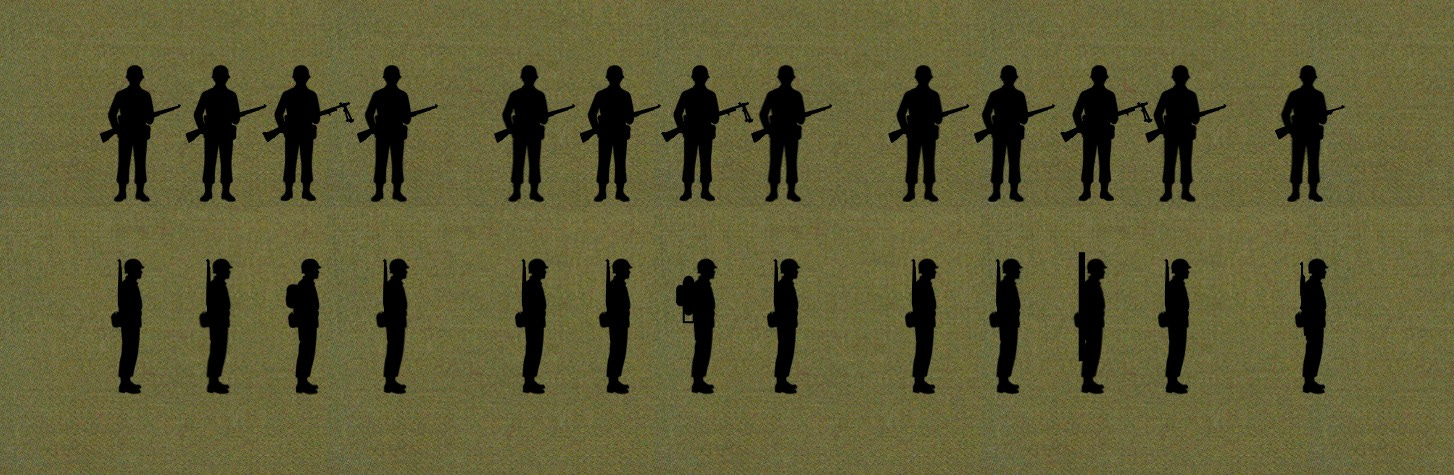
The authors of the G-Series of establishments, which were signed on 1 May 1945, provided each Marine infantry battalion with a regularly constituted assault platoon. With an authorized strength of one officer and fifty-five enlisted Marines, each of these platoons consisted of a ten-man headquarters and three fifteen-man assault sections. Each assault section, in turn, broke down into two seven-man assault squads.
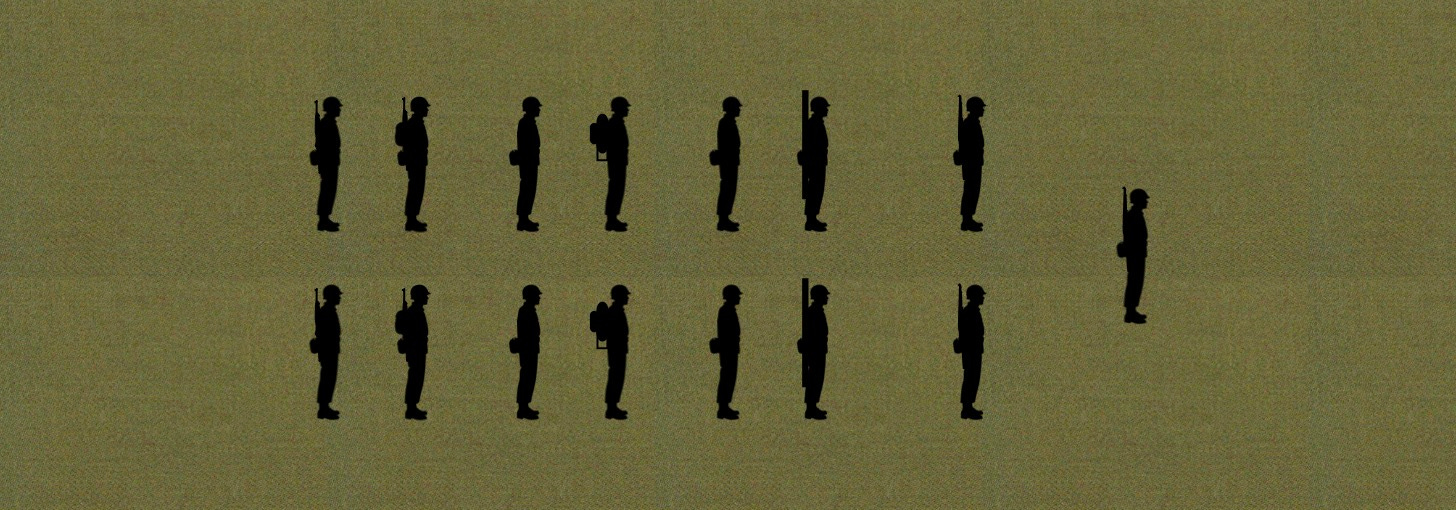
As a rule, each assault squad operated one bazooka, one flamethrower, and one demolition kit. However, to provide a degree of flexibility and, in particular, to allow for refueling, each assault section rated three bazookas and four flamethrowers. (In other words, an assault section received one spare rocket launcher and two spare flame weapons.)
Sources
Marine Corps Schools A Supplement to Weapons (Marine Infantry Battalion) (Quantico: Marine Corps Schools, 1944) pages 105-114 (for rocket launchers), 119-126 (for flamethrowers) and 127-136 (for demolition kits) (Internet Archive)
John J. Sayen Battalion: An Organizational Study of United States Infantry (unpublished manuscript) Appendix 7
For Further Reading


Brings back memories of the M202! Recall this man portable Multishot “incendiary rocket launcher” was something of a mystery to the rifle battalions. We actually had the M202 in the POI at Infantry Training school circa 1979-81, and taught a couple of hours on it to the basic 0351/52 MOS’s. We never fired it, apparently it had a bad habit of exploding on the right shoulder of the 0351/52 lucky enough to lug it around and attempting to engage a target. It was a cool idea, but had its problems. It is this writers understanding that the SMAW has replaced the M202. To be honest, a Marine with the M203, or even the M79 “Blooper” can be damn effective whist engaging in the three “B’s”. Blind ‘em, Blast ‘em and Burn ‘em tactical use. Simple is good. A Marine with a good eye and practice can lob a WP 40mm round through a window at 200 meters and it is organic to down to the fire team level and very simple to operate and keep clean. But, always good to have plenty of trick in the kit bag. Never know when you’re going bunker busting…
Fascinating. One can only imagine the energy, special provisions and training it took to store, transport and employ such devices.