

Short Tactical Problems
The philosophy of the 'Infantry School Mailing List'

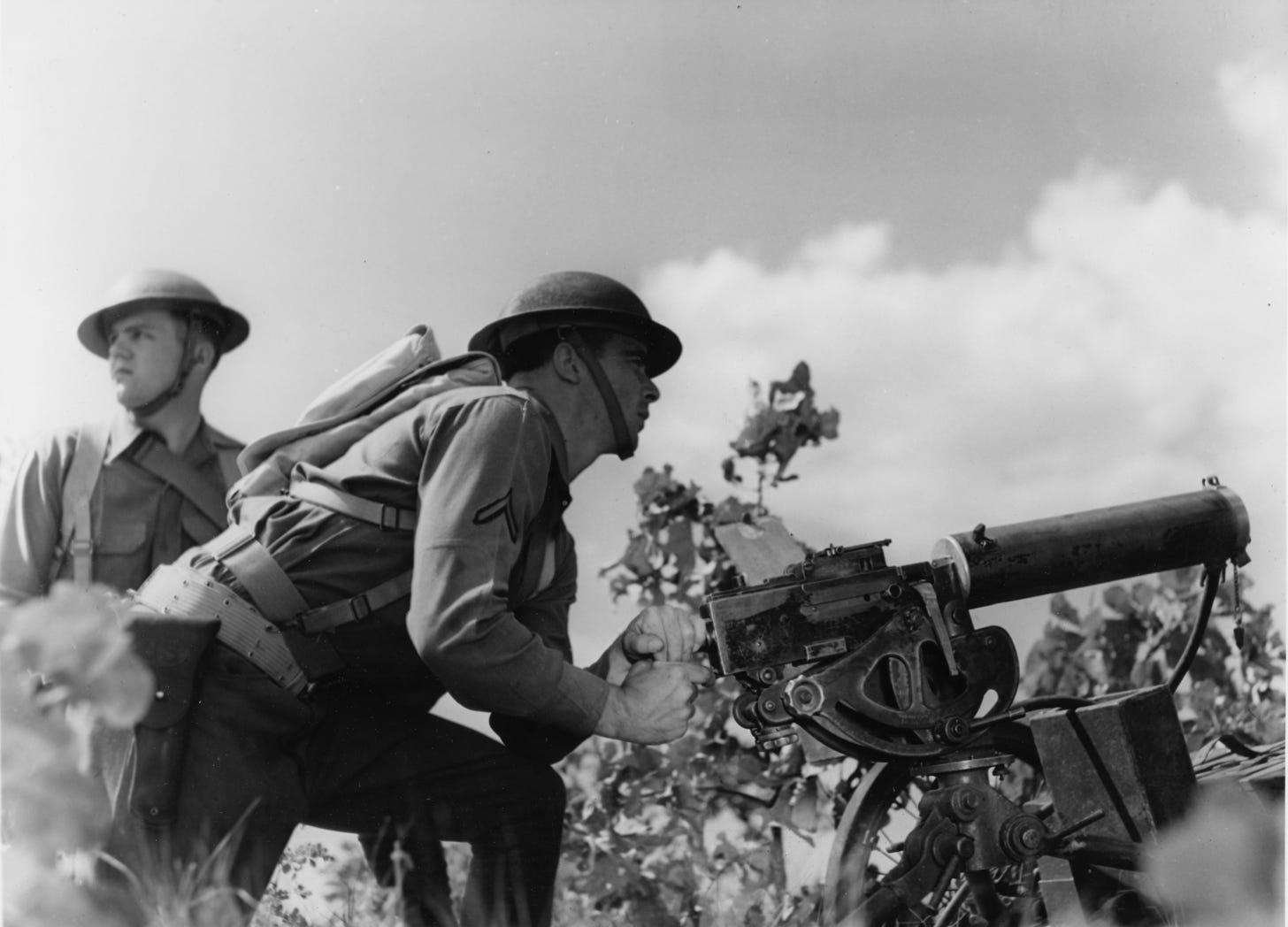
The first issue of the Infantry School Mailing List contained much of interest to folks fond of decision games: a personal experience monograph (suitable for conversion into a decision-forcing case), a substantial tactical problem, and a series sixteen short tactical problems. The anonymous author (or authors) of the latter began the last-named set of exercises with a foreword that described their purpose.
FOREWORD
The following problems are intended to bring out:
The difference between operations which, in a given situation, may be undertaken with veterans, and those advisable with partly trained or slightly trained troops.
The vagueness of information which may be expected in mobile warfare, the necessity of making decisions despite this, and the desirability of aggressive action; this lack of detailed information in regard to the enemy, the element of the unknown, has been, and probably always will be, the usual situation in war; situations in which very detailed information of the enemy is known, as in some of our map problems, will be the unusual case.
Employment in various kinds of attacks of infantry units of the new organization.
A problem with a sketch or diagram is stated on one page. To get the most from these problems the reader should come to a definite decision in each case before turning the page to find the solution.
While one definite solution is given in each case it is realized that there are frequently other solutions which might work as well or better. There are many elements or considerations which cannot be indicated on a sketch or in a map problem; therefore readers are requested to consider solutions as tendencies rather than cut and dried ‘thou shalts’.
No one standard method will answer all cases; in map problems we usually show all our attacks beautifully coordinated by the commander. This is highly desirable but often impracticable. If we never do anything in war that is not coordinated to the Nth degree, we stand an A1 chance of not doing anything.
Aggressiveness, simplicity, maneuver and surprise should be striven for. If your solution contains these, it is better perhaps than the one given.
The problems are not intended to lay down rules; they are meant to stimulate thought.
The sixteen problems that followed this foreword will appear, in the course of the summer of 2026, in the pages of The Tactical Notebook.
Related Reading


