

Sherman on Courts Martial
Imaginary Armies

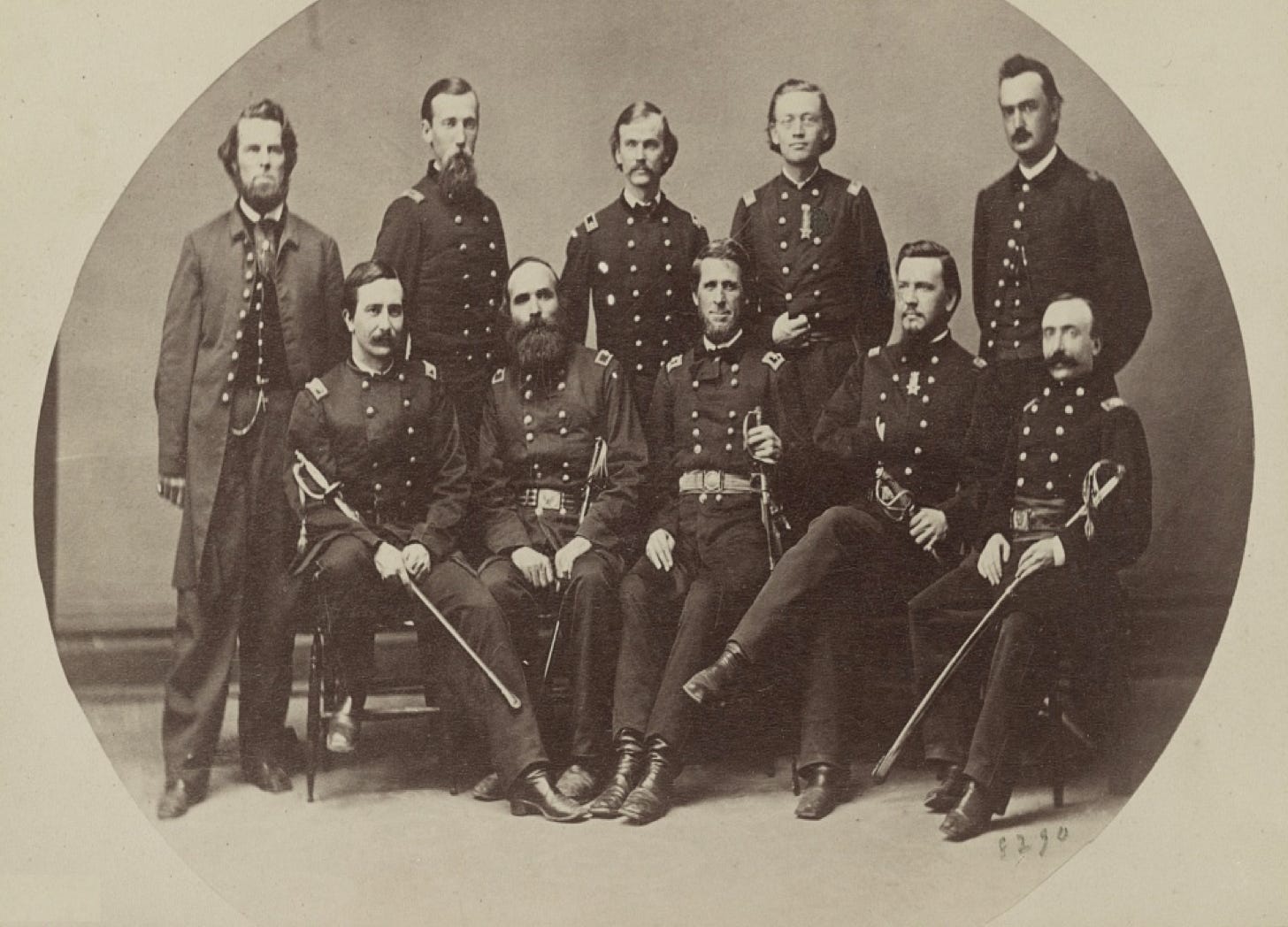
William Tecumseh Sherman devoted but one paragraph of his memoirs to his opinion on the subject of courts martial.
In camp, and especially in the presence of an active enemy, it is much easier to maintain discipline than in barracks in time of peace. Crime and breaches of discipline are much less frequent, and the necessity for courts-martial far less. The captain can usually inflict all the punishment necessary, and the colonel should always. The field-officers' court is the best form for war, viz., one of the field-officers -the lieutenant-colonel or major - can examine the case and report his verdict, and the colonel should execute it. Of course, there are statutory offenses which demand a general court-martial, and these must be ordered by the division or corps commander; but the presence of one of our regular civilian judge-advocates in an army in the field would be a first-class nuisance, for technical courts always work mischief. Too many courts-martial in any command are evidence of poor discipline and inefficient officers.
Sources
Apart from items printed in italic letters, the text of this post comes from: William Tecumseh Sherman Memoirs of William T. Sherman (New York: D. Appleton, 1875) Volume II, Chapter XIV (Internet Archive)
Librivox offers, free of charge, an audio version of the aforementioned chapter. The viva voce version of the paragraphs reprinted in this post can be found in the recording marked ‘Military Lessons of the War - Section 2’. (The Tactical Notebook salutes Librivox reader David Wells for the high quality of this program and thanks him for his support of this remarkable service.)
For a detailed description of the German system of recruitment of the early 1870s, see Gerald F. Talbot Analysis of the Organization of the Prussian Army (Berlin: W. Moeser, 1871) (Hathi Trust)
Related Reading


