

Sherman on Recruitment
Imaginary Armies

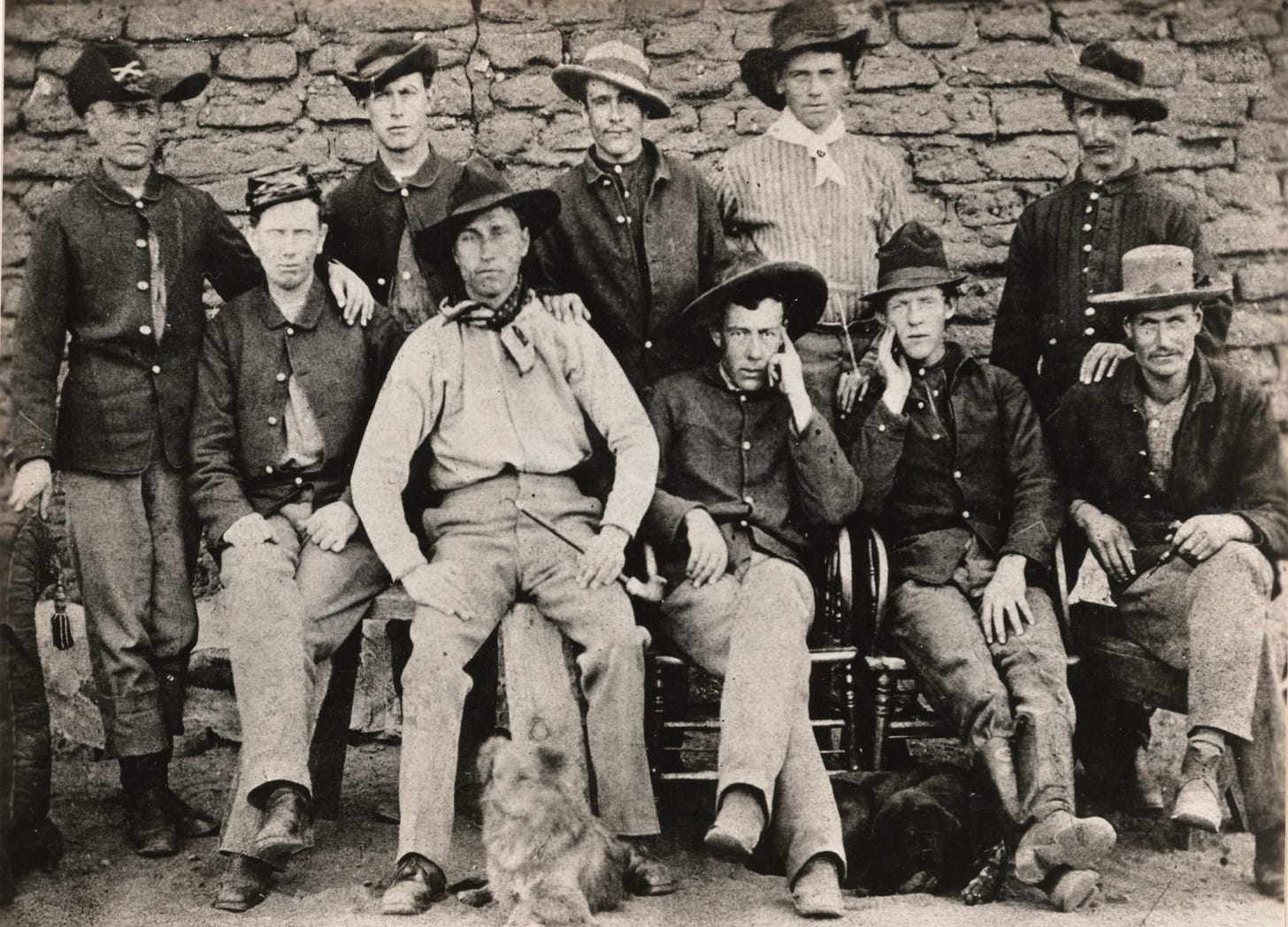
In the last chapter of his memoirs, William Tecumseh Sherman offers both a critique of the methods that the Union Army used to obtain recruits and some ideas for ways an American army of the near future might improve on them.
But the real difficulty was, and will be again, to obtain an adequate number of good soldiers. We tried almost every system known to modern nations, all with more or less success – voluntary enlistments, the draft, and bought substitutes and I think that all officers of experience will confirm my assertion that the men who voluntarily enlisted at the outbreak of the war were the best, better than the conscript, and far better than the bought substitute.
When a regiment is once organized in a State, and mustered into the service of the United States, the officers and men become subject to the same laws of discipline and government as the regular troops. They are in no sense ‘militia’, but compose a part of the Army of the United States, only retain their State title for convenience, and yet may be principally recruited from the neighborhood of their original organization.
Once organized, the regiment should be kept full by recruits, and when it becomes difficult to obtain more recruits the pay should be raised by Congress, instead of tempting new men by exaggerated bounties. I believe it would have been more economical to have raised the pay of the soldier to thirty or even fifty dollars a month than to have held out the promise of three hundred and even six hundred dollars in the form of bounty. (During the Civil War, a private in the Union Army earned thirteen dollars per month.)
Toward the close of the war, I have often heard the soldiers complain that the ‘stay-at-home’ men got better pay, bounties, and food, than they who were exposed to all the dangers and vicissitudes of the battles and marches at the front. The feeling of the soldier should be that, in every event, the sympathy and preference of his government is for him who fights, rather than for him who is on provost or guard duty to the rear, and, like most men, he measures this by the amount of pay.
Of course, the soldier must be trained to obedience, and should be ‘content with his wages’, but whoever has commanded an army in the field knows the difference between a willing, contented mass of men, and one that feels a cause of grievance. There is a soul to an army as well as to the individual man, and no general can accomplish the full work of his army unless he commands the soul of his men, as well as their bodies and legs.
The greatest mistake made in our civil war was in the mode of recruitment and promotion. When a regiment became reduced by the necessary wear and tear of service, instead of being filled up at the bottom, and the vacancies among the officers filled from the best non-commissioned officers and men, the habit was to raise new regiments, with new colonels, captains, and men, leaving the old and experienced battalions to dwindle away into mere skeleton organizations. I believe with the volunteers this matter was left to the States exclusively, and I remember that Wisconsin kept her regiments filled with recruits, whereas other States generally filled their quotas by new regiments, and the result was that we estimated a Wisconsin regiment equal to an ordinary brigade.
I believe that five hundred new men added to an old and experienced regiment were more valuable than a thousand men in the form of a new regiment, for the former by association with good, experienced captains, lieutenants, and non-commissioned officers, soon became veterans, whereas the latter were generally unavailable for a year. The German method of recruitment is simply perfect, and there is no good reason why we should not follow it substantially.
After praising the perfection of ‘the German method of recruitment’, General Sherman changed the subject. Thus, we cannot know which aspects of the manpower policies of contemporary German armies recommended themselves to him. I suspect, however, that, rather than calling for peacetime conscription, Sherman had in mind the German custom of linking each regiment on active service to a home-based replacement depot.
Known as an Ersatz battalion, this depot provided an organizational home for recruits, trained men surplus to the needs of the regiment, and men recovering from sickness or wounds. It also served as a link between a regiment and its home community, the place where the unit had been based before the outbreak of war, the locality to which it would return at the end of hostilities, and the region that provided the vast majority of its members.
Sources
Apart from items printed in italic letters, the text of this post comes from: William Tecumseh Sherman Memoirs of William T. Sherman (New York: D. Appleton, 1875) Volume II, Chapter XIV (Internet Archive)
Librivox offers, free of charge, an audio version of the aforementioned chapter. The viva voce version of the paragraphs reprinted in this post can be found in the recording marked ‘Military Lessons of the War - Section 1’. (The Tactical Notebook salutes volunteer reader David Wells for the high quality of this program and thanks him for his support of this remarkable service.)
For a detailed description of the German system of recruitment of the early 1870s, see Gerald F. Talbot Analysis of the Organization of the Prussian Army (Berlin: W. Moeser, 1871) (Hathi Trust)
Related Reading


Pay: The WWI doughboys also complained that the stay at home men/war workers got better pay than they did and it was true. That's why Congress passed the The World War Adjusted Compensation Act of 1924. It was designed to equalise the pay structure, posthumously, at $1 per day served stateside or $1.25 per day overseas, capped at $500 or $625 respectively. The WWI vets were supposed to begin receiving the compensatory amounts in 1945.
My g-g-grandfather was a Kentucky cavalryman who rode with Sherman all the way to the sea.