

Machine Gun Squads, Sections, and Platoons
Of the US Army infantry battalion of 1927

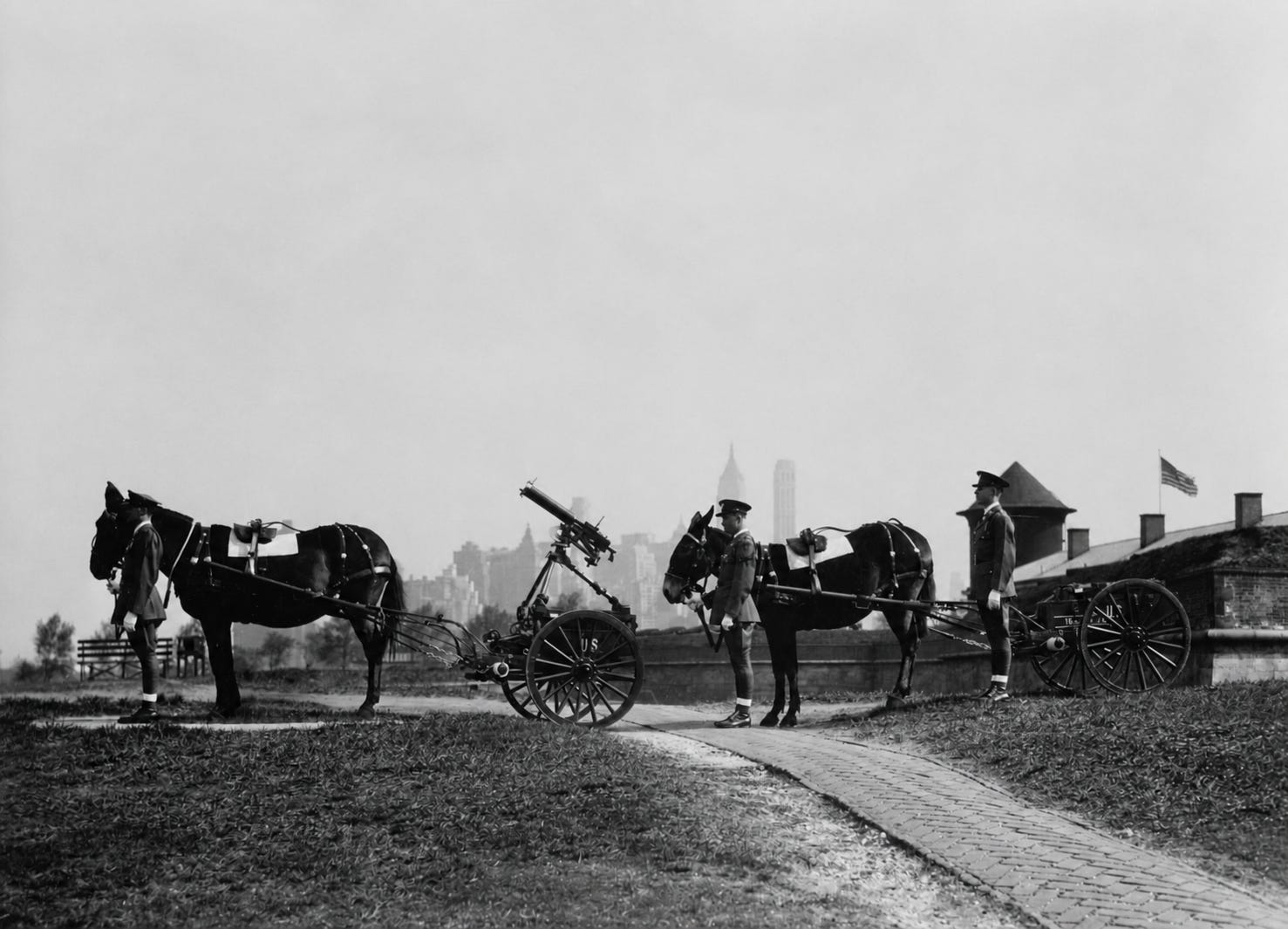
On 27 June 1927, the US War Department adopted tables of organization that provided each wartime infantry battalion with a machine gun company. The business end of this outfit rated twelve machine gun squads, each of which employed a single water-cooled, tripod-mounted, belt-fed, rifle-caliber Browning.
In addition to its definitive weapon, each of these machine gun squads rated two mules, two carts, two drivers, eight machine gunners, and a corporal to rule them all.
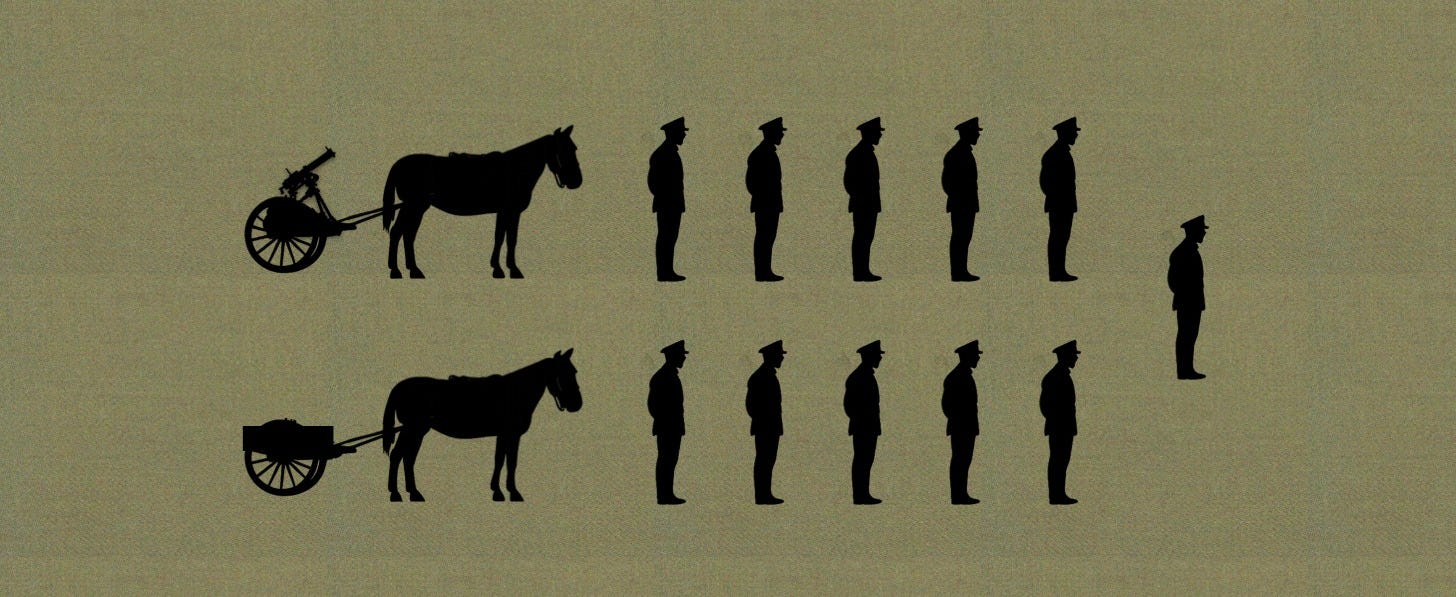
The machine gun squads paired off to form machine gun sections. Two of these sections, in turn, made a four-piece machine gun platoon.
Where the headquarters of each section consisted entirely of the sergeant who served as the section leader, the headquarters of the platoon enjoyed the services of:
a lieutenant (platoon commander)
a sergeant (platoon sergeant)
a signals NCO (corporal)
a transport NCO (corporal)
four messengers (privates)
The differences that distinguished the platoon headquarters from the section headquarters suggests that, while the former could be employed independently, the latter would, under normal circumstances, operate as part of its parent platoon. To put things another way, the architects of the relevant tables of organizations presumed that, while battalion commanders would frequently, if not routinely, attach machine gun platoons to rifle companies, they would only separate machine gun sections from their parent platoons under exceptional circumstances.
The machine gun squad rated no rifles. Instead, each of its eleven men carried a pistol. The platoon headquarters, however, was authorized five rifles – one for each messenger and one for one of the non-commissioned officers.
Sources
The photo depicts the mules, carts, and drivers of a machine gun squad of H Company of the 16th Infantry Regiment prepared for a parade. (Note the white gloves, white shirts, and white bands over the puttees.) The state of the Manhattan skyline, with the Chrysler Building still taller than the yet-to-be-finished Empire State Building, indicates that the picture was taken sometime before the completion of the latter edifice in April of 1931.
John J. Sayen Battalion: An Organizational Study of the United States Infantry (unpublished manuscript) Appendices 2 and 3 (Military Learning Library)
Related Reading


Where in NYC was the photo taken? Fort Hamilton? Governor’s Island?
More MG LMG SMG SGT
We like it we love it we want more of it