

Short Problem 9
From the 'Infantry School Mailing List'

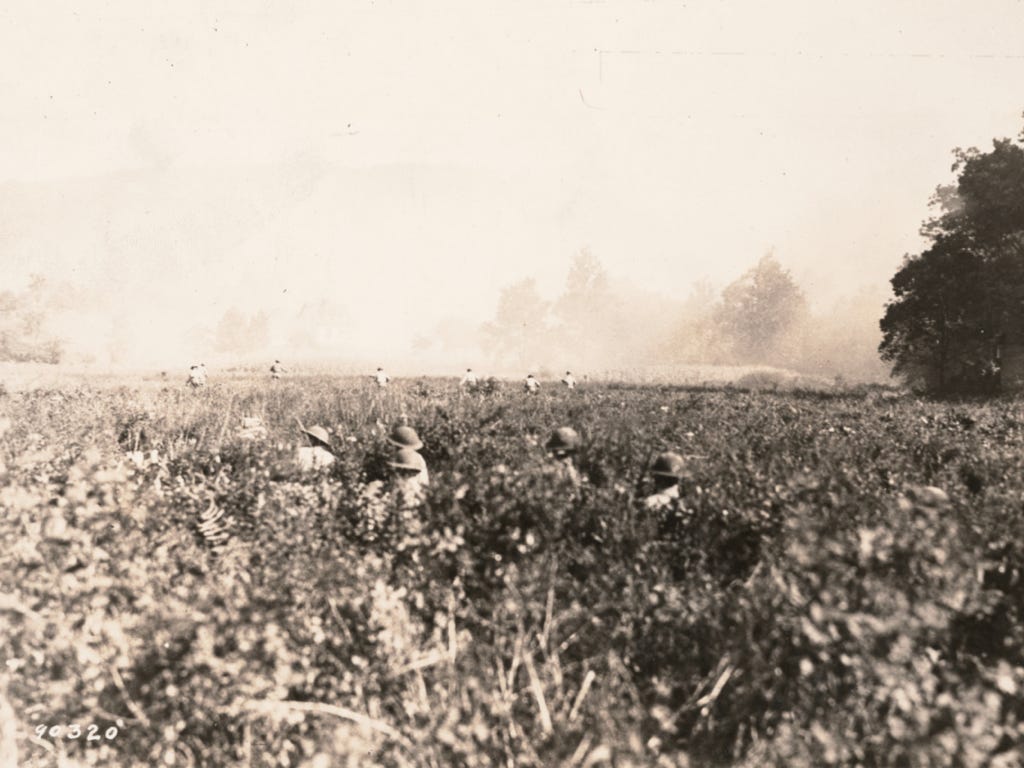
The following problem appeared in the first semi-annual volume of the Infantry School Mailing List, which rolled off the press in 1931. (This periodical, which might well be described as a journal in all but name, replaced the collections of mimeographed instructional materials that the US Army Infantry School sent out to subscribers in the 1920s.)
For the philosophy behind theses problems, please see:

The problem calls for players to step, successively, into the shoes of the commander of a battalion of the type being tested at the Infantry School in 1931. This battalion consists of three rifles companies (each of three rifle platoons) and a machine gun company (of four four-gun machine gun platoons.) It has been reinforced with a platoon (of two 75mm mortars and two 37mm guns) from the cannon company.
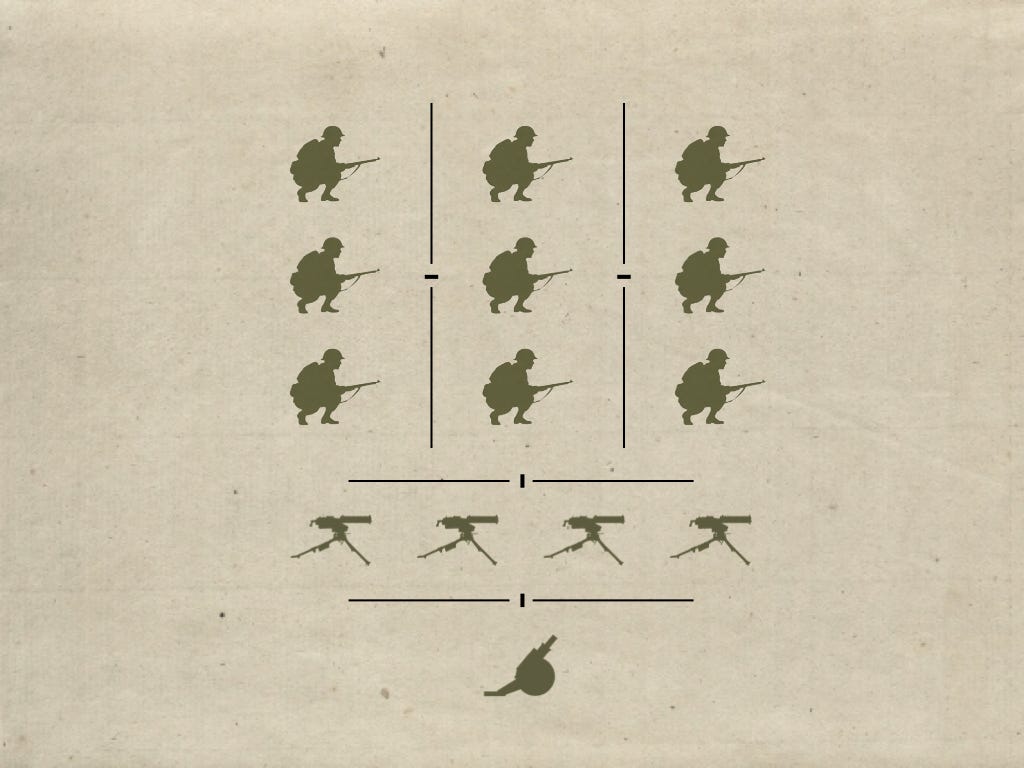
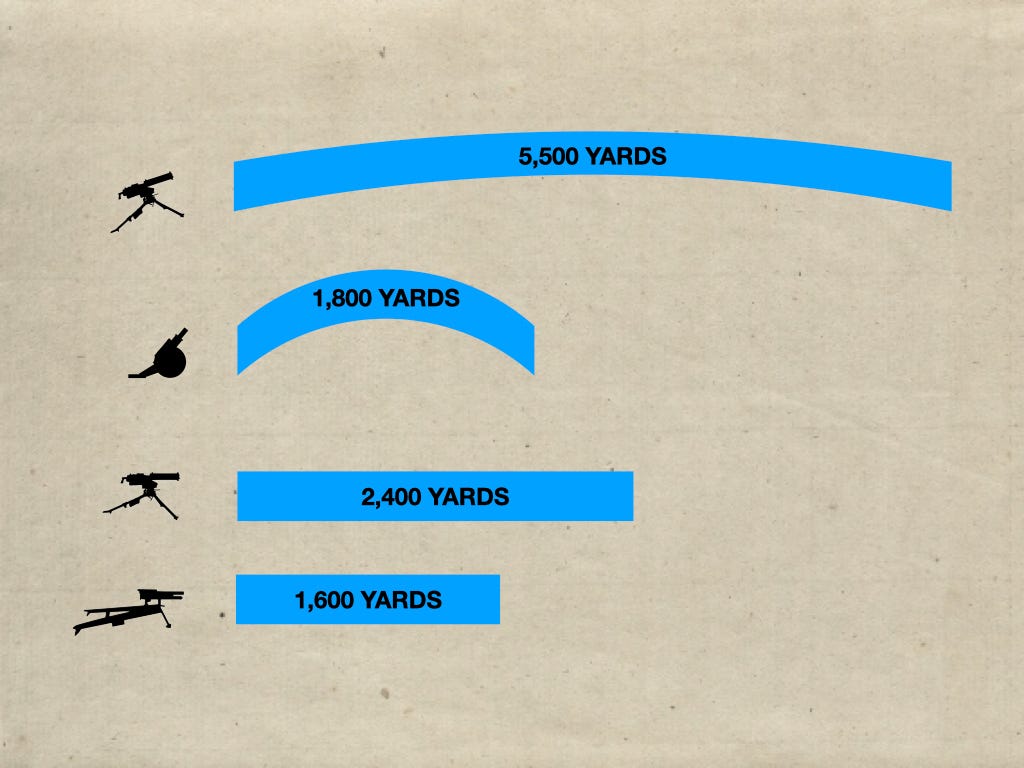
For more about the machine gun company and the cannon platoon, please see:


PROBLEM NO. 9
‘For ‘e might ‘ave gone and sprayed ‘em with a pompom.’
Rudyard Kipling
Stellenbosh
SITUATION
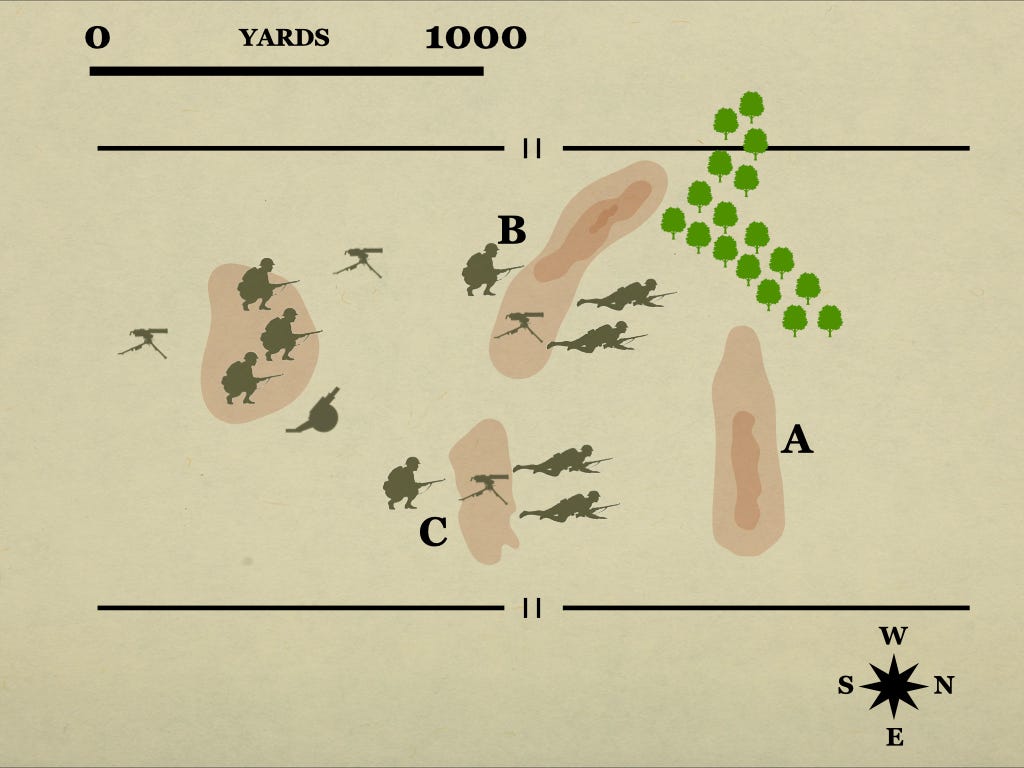
An interior battalion attacking northward, after initial progress, has been checked by enemy riflemen and machine guns on Hill A.
Assault companies of the battalion are pinned to the ground except that support platoons have not been used and are under cover of Hills B and C.
Two platoons of machine guns are firing from Hills B and C.
The remainder of the machine-gun company, an attached cannon-company platoon and a rifle company in battalion reserve have just reached the positions indicated on the sketch.
The battalion on the right is abreast; that on the left in advance.
REQUIREMENT
Brief statement of how the battalion commander intends to continue the attack.
If the assault companies have used their support platoons and all machine guns and cannon-company weapons are firing from Hills B and C, how does the battalion commander intend to continue the attack?
How to Play
I invite paid subscribers to to use the comments section to share their own answers to the questions posed.
I will post the original (1931) solutions to the problem, as well as my own commentary, on Sunday, 12 July 2026.
Sources
‘Infantry Problems’ Infantry School Mailing List (Fort Benning: US Army Infantry School, 1931) Volume 1 (1930-1931) page 44 (Internet Archive)
The Internet Archive preserves scans of microfilmed copies of all thirty volumes of the Infantry School Mailing List. However, it catalogs them under the heading of the Infantry School Quarterly, which succeeded the Mailing List in 1947. (Internet Archive)
The Hathi Trust provides links to scanned-from-paper copies of some, but far from all, issues of the Infantry School Mailing List (Hathi Trust)
You can find the entirety Stellenbosch on the websites of The Poetry Lovers Page and The Kipling Society.
Mounted on a carriage similar to the ones used with field pieces, a ‘pom-pom’ fired a shell of the same size or weight (one pound, more or less) than the 37mm gun of the type that appears in this problem.
Related Reading

1. The Battalion will continue the attack by committing the reserve rifle company. This company, reinforced one machine gun platoon, is now the Main Effort and will move northwest around Hill B into the wooded area west of the enemy position on Hill A. The support platoon of the company on Hill B is now the Battalion Reserve. The Main Effort will attack with its attached machine gun platoon attacking by fire from the northern edge of the woods and, two rifle platoons up and one rifle platoon in a follow and support role. 5 minutes before this attack begins, the supporting platoon of the company at Hill C will conduct a diet by moving into view at the crest of the hill. As this happens, all other units, to include supporting fires by Field Artillery, will place maximum direct and indirect fires on enemy positions on and behind Hill A, especially if additional enemy forces are identified by the Main Effort.
2. In this event, the reserve rifle company will detach one platoon as the battalion reserve and mount its attack as previously stated.
All units, particularly the Main Effort, will watch their flanks, most especially when entering the wooded area.