

Short Problem 5
From the 'Infantry School Mailing List'

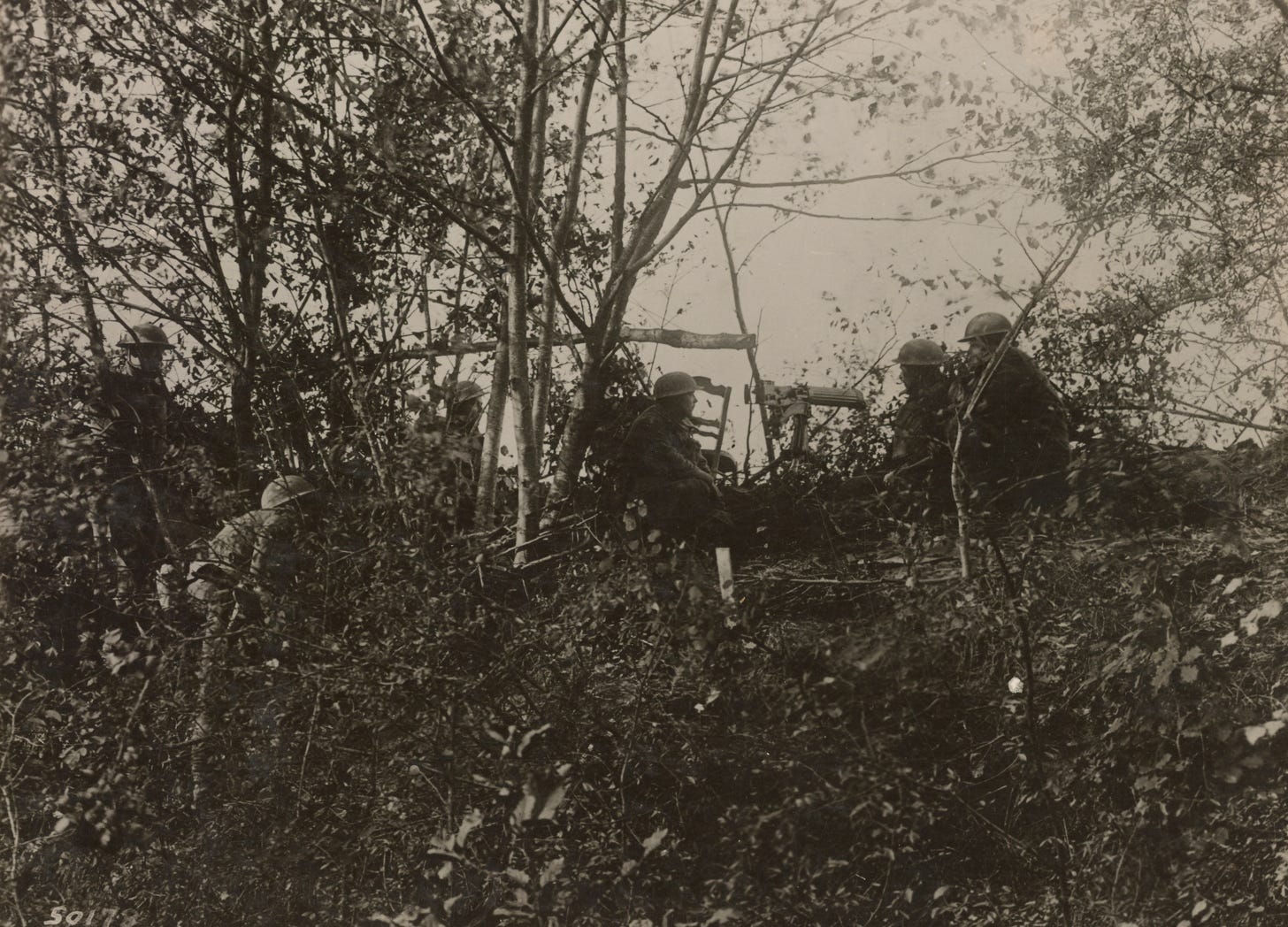
The following problem appeared in the first semi-annual volume of the Infantry School Mailing List, which rolled off the press in 1931. (This periodical, which might well be described as a journal in all but name, replaced the collections of mimeographed instructional materials that the US Army Infantry School sent out to subscribers in the 1920s.)
For the philosophy behind theses problems, please see:

The problem calls for players to step into the shoes of a lieutenant who finds himself leading his rifle platoon in two slightly different situations. In both of these scenarios, the platoon consists of two rifle sections, each of which contains three eight-man rifle squads.
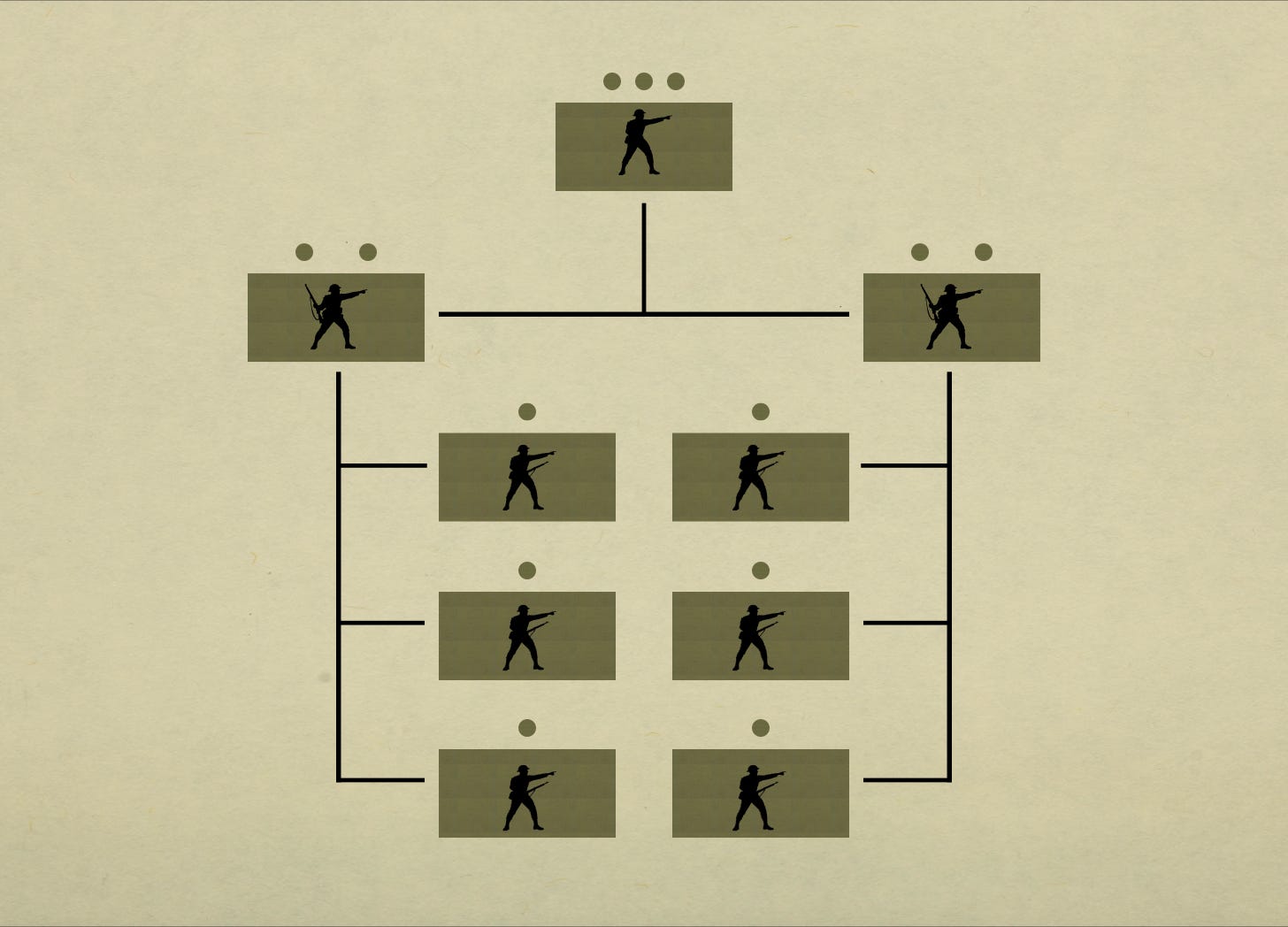
Each of the rifle squads rates a leader, two scouts, two automatic rifleman, two assistant automatic riflemen, and a rifle-grenadier. Thus, each section weighs in at twenty-five combatants, six automatic rifles, and nineteen bolt-action rifles (three of which have been configured as grenade launchers.)
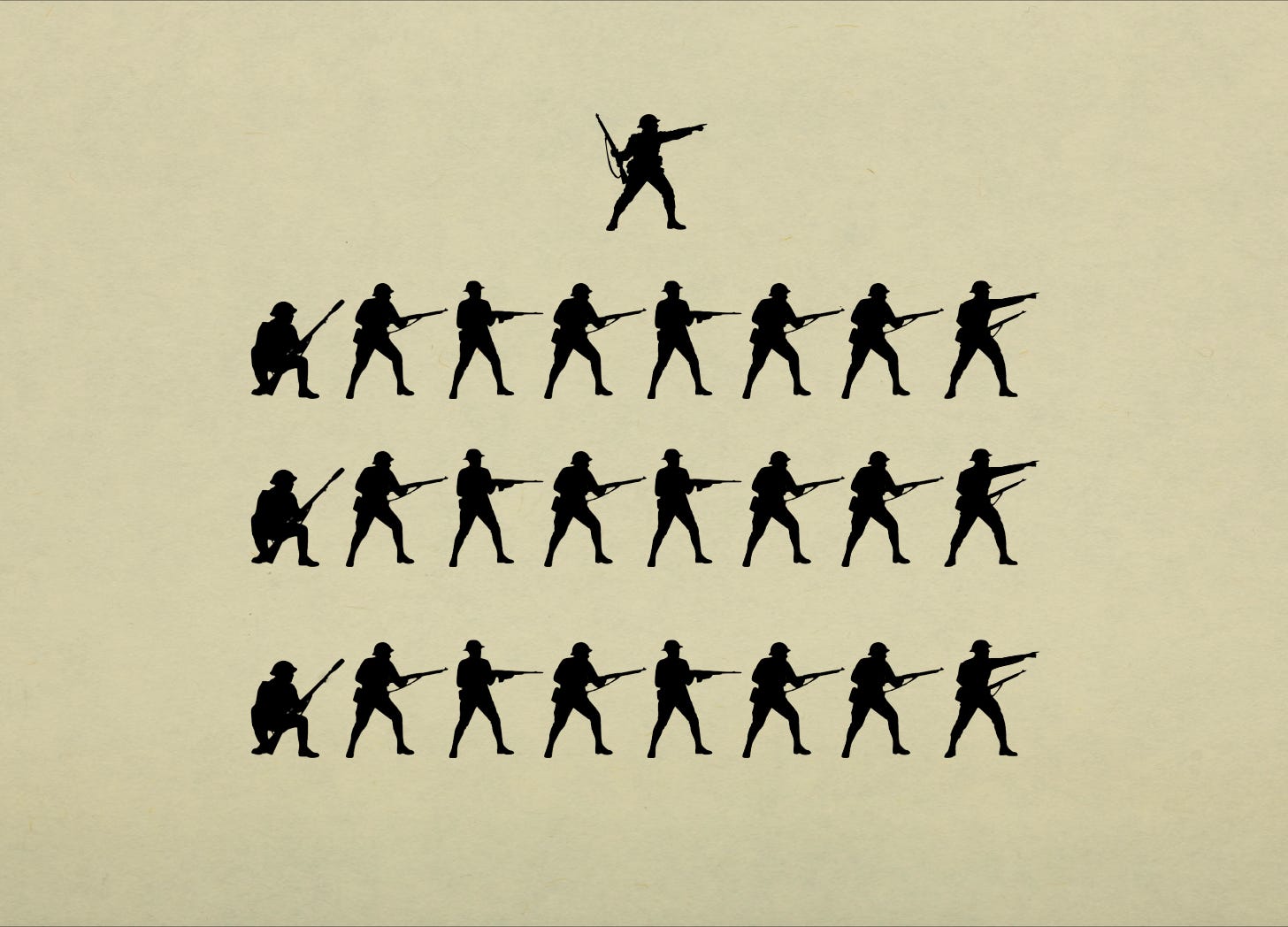
The rifles, automatic and otherwise, are effective at ranges out to five hundred yards. The grenade launchers can fire grenades as far as two hundred yards.
PROBLEM NO. 5
‘In courage keep your heart,
In strength, lift up your hand’
Rudyard Kipling
For All We Have and Are
SITUATION
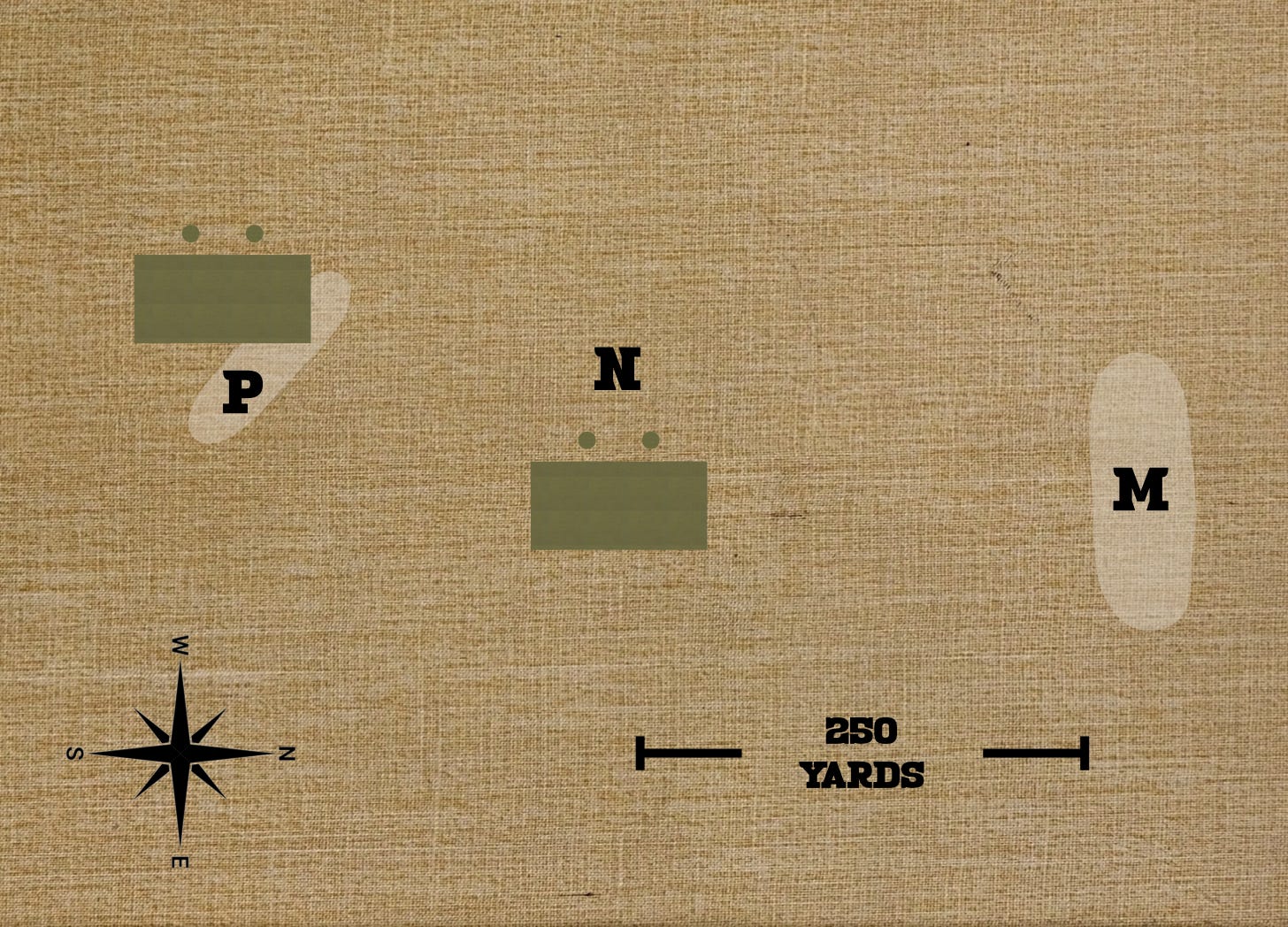
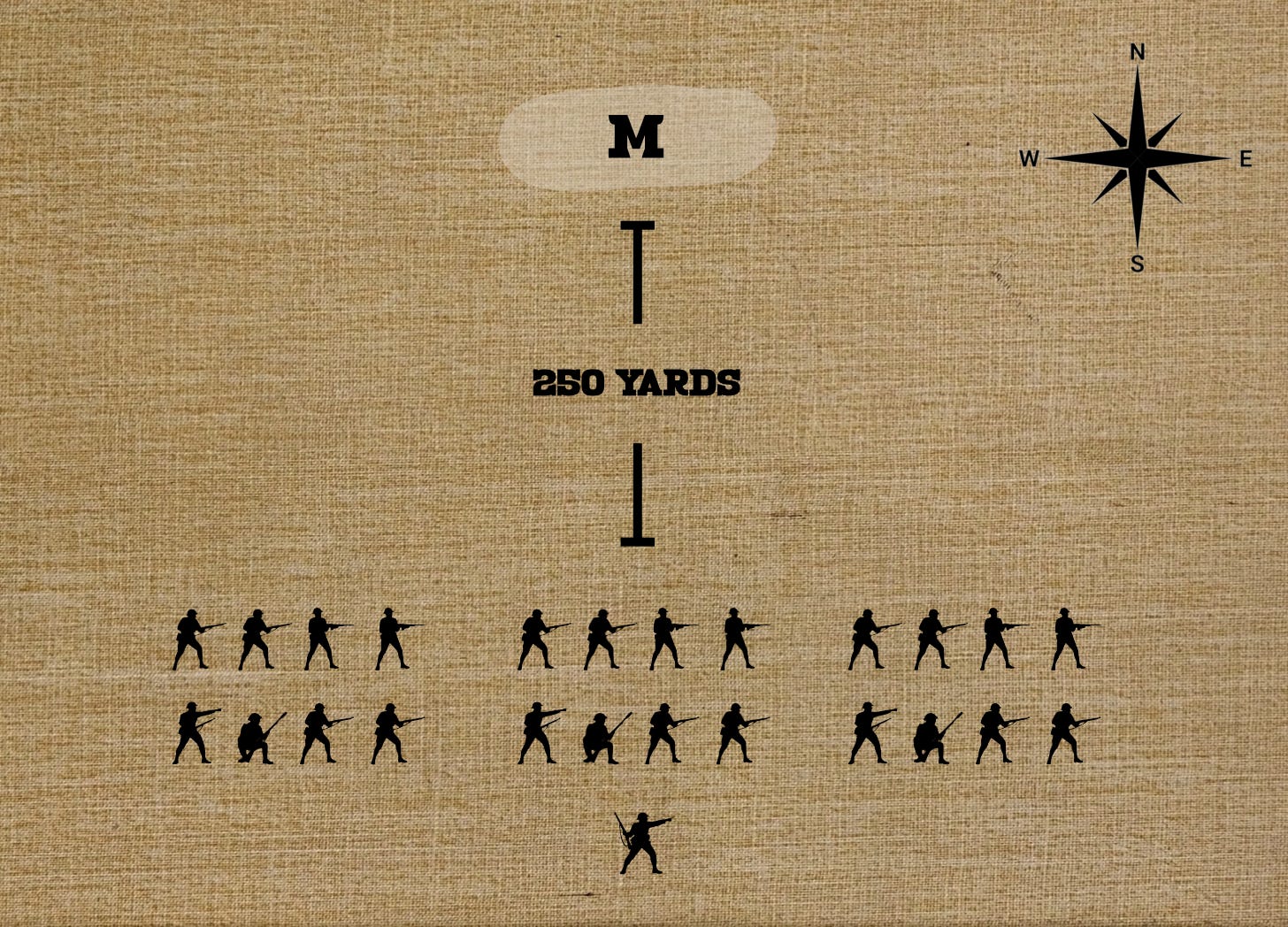
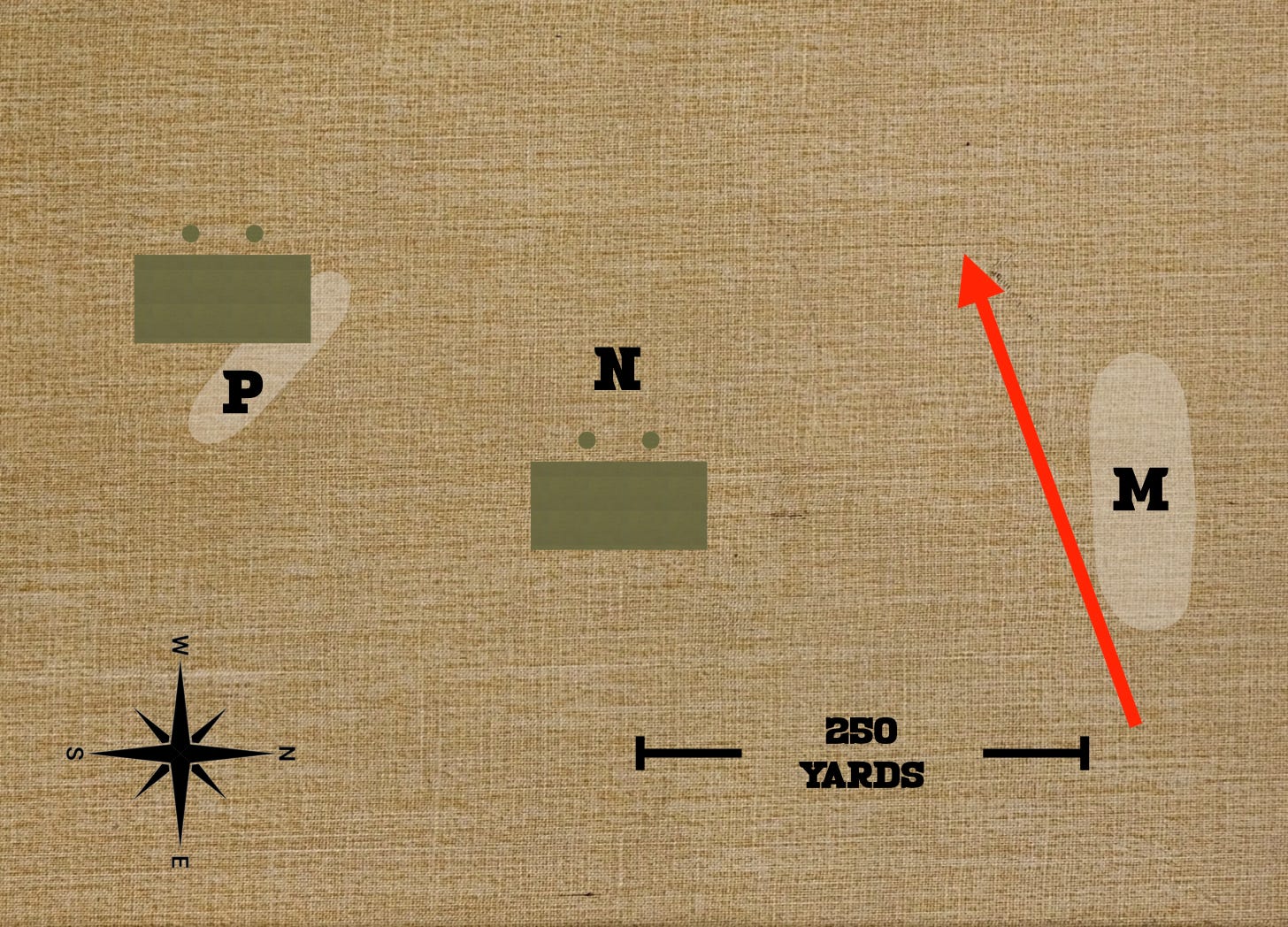
A platoon in Sketch C is attacking northward. The leading section is firing from N at the enemy post at M. The rear section is in a depression at P.
REQUIREMENT
(1) What is the fire distribution within the section at N and within squads? (Please note the changed orientation of the map.)
(2) Enemy fire from M weakened and the section at N advanced as shown by the arrow. Its advance halted when it observed enemy machine-gun fire, source un- determined, as indicated on the sketch. What does the platoon leader do?
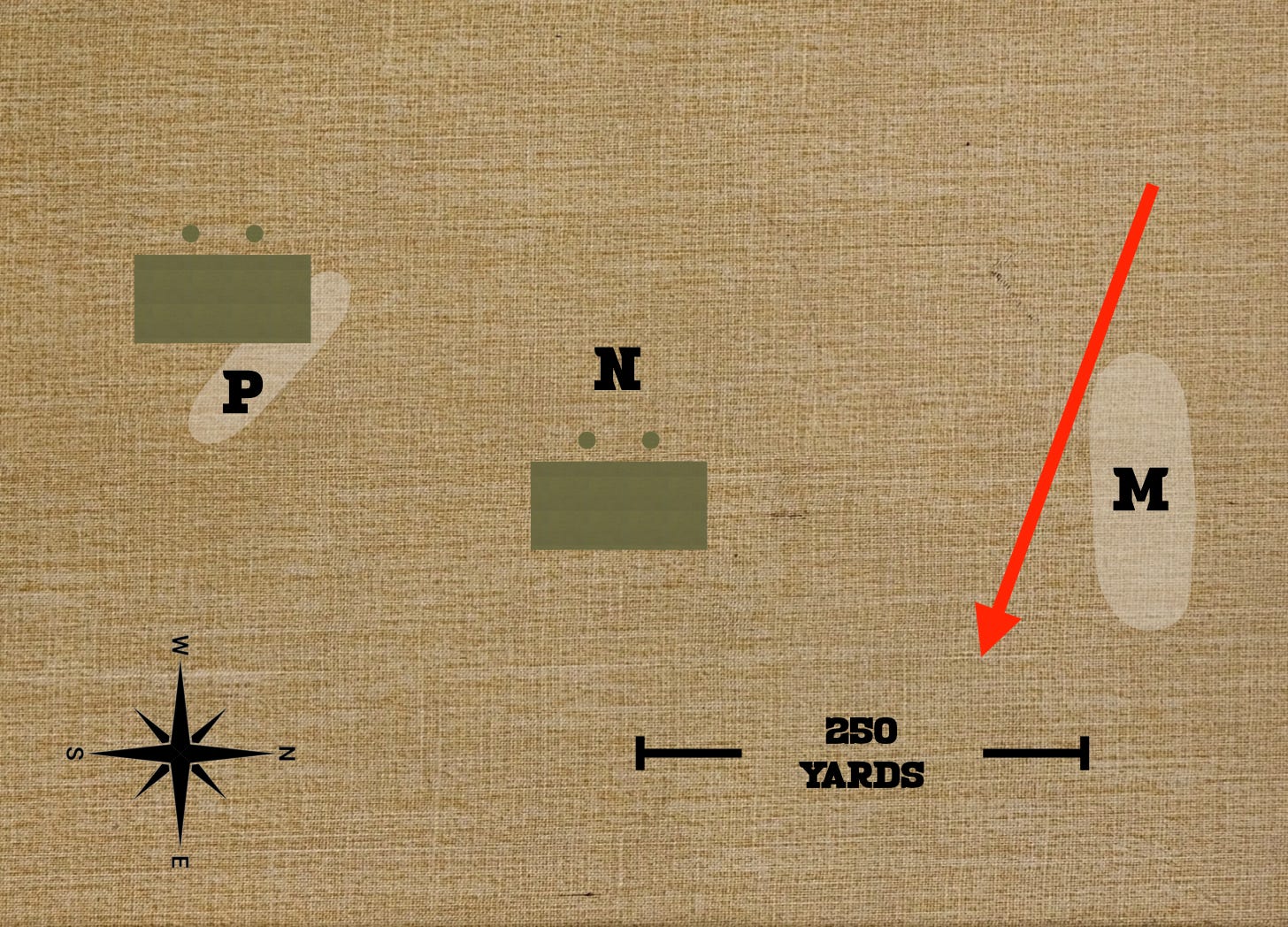
(3) The situation in sketch D is the same except that the machine gun fire is coming from the west. The section by moving forward to the right (east) can avoid this fire, but further advance has been stopped by (rifle) fire from M. What does the platoon leader do?
How to Play
I invite paid subscribers to to use the comments section to share their own answers to the questions posed.
I will post the original (1931) solutions to the problem, as well as my own commentary, on Sunday, 14 June 2026.
Source
‘Infantry Problems’ Infantry School Mailing List (Fort Benning: US Army Infantry School, 1931) Volume 1 (1930-1931) page 32 (Internet Archive)
The Internet Archive preserves scans of microfilmed copies of all thirty volumes of the Infantry School Mailing List. However, it catalogs them under the heading of the Infantry School Quarterly, which succeeded the Mailing List in 1947. (Internet Archive)
The Hathi Trust provides links to scanned-from-paper copies of some, but far from all, issues of the Infantry School Mailing List (Hathi Trust)
The quotation from Kipling appeared in the original version of the problem. The complete poem can be found on the website of the Poetry Foundation.
Related Reading


Not having had personal experience of either BAR's or grenade launchers, having only seen pictures of them, why does the BAR guy get an assistant, but the grenadier doesn't? Is it something to so with the weight of - ????? Or ???
Just from the pictures, it looks like the grenadier is the guy who could most benefit from an assistant.
Halp?
(1) Fires distribution within the section is two squads firing and one squad advancing in rotation. All fires are focused on the objective, less the grenadiers who will not fire until they are in range.
(2) Give the following orders: 1st Section (the one at N) is to halt and dig in while maintaining fire on enemy forces at M. 2nd Section, at P, is to move east and then north, squads on line and echelon right (to the east) to determine the location of the machine gun fire and attack to destroy it. Platoon elements will then continue the attack against enemy forces at M, with 1st Section supporting by fire and 2nd Section attacking to defeat the enemy and occupy M. If it is not possible to to destroy the machine gun or if 2nd Section encounters more than a squad of enemy forces that n addition to the machine gun, 2nd Section will assist 1st Section in laying smoke to break contact and reassemble at P. I would also inform the Company Commander of all of the above and request a mortar observer and at least one machine gun team to support our attack and that they meet the Platoon Sergeant at N. I would go forward with 2nd Section and tell my Platoon Sergeant to watch for additional enemy forces and to extract 1st Section if it appears they will be decisively engaged or captured.
(3) As above, except that 2nd Section will move west and then north to attack and will move echelon left (west).