

Marine Corps Schools
A Proposal for Reform

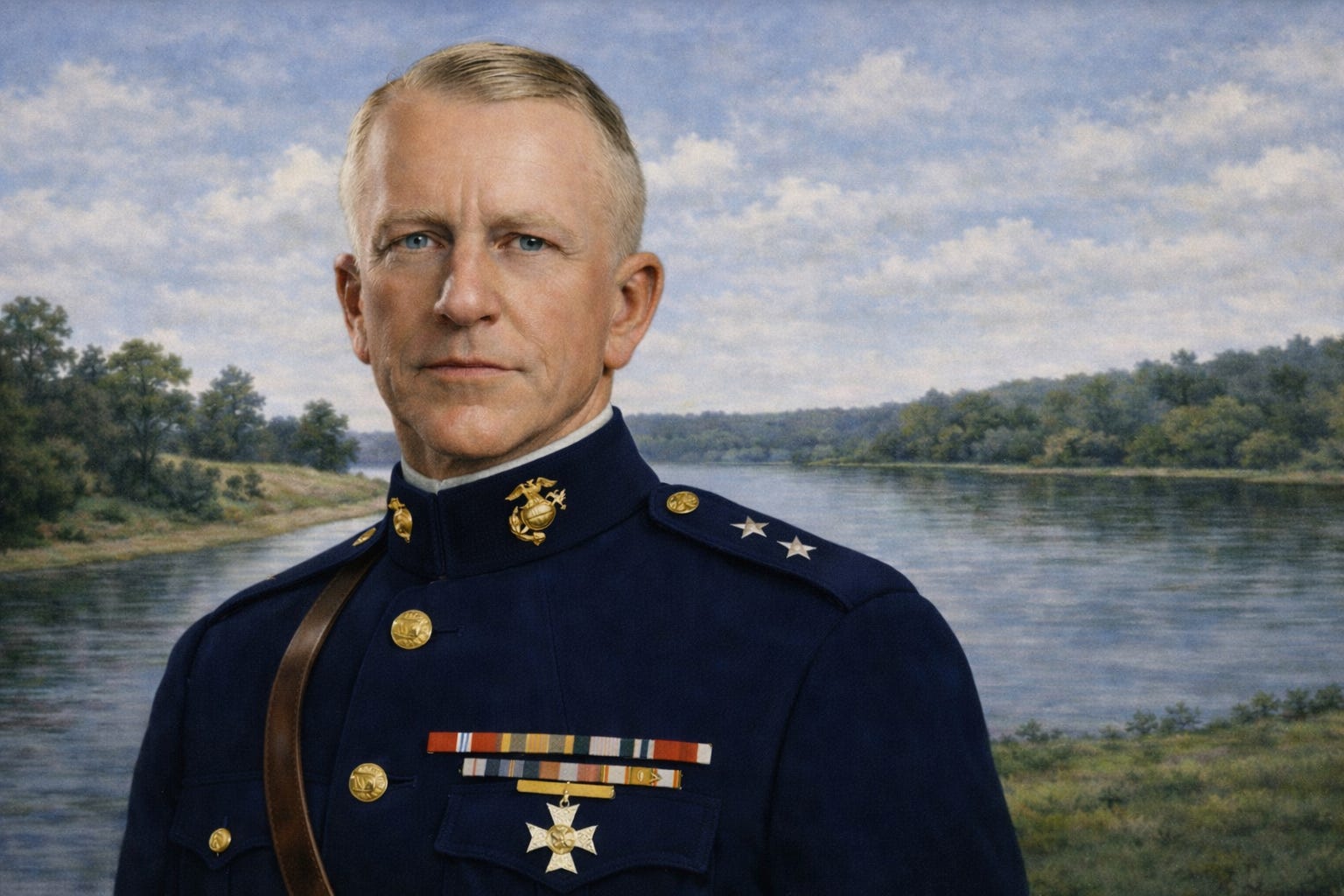
During his second tour of duty as the commandant of the Marine Corps Schools, James Carson Breckinridge wrote the following letter to the senior Marine on active duty, Major General Commandant.
4 December, 1933
Memorandum For: The Major General Commandant.
Subject: The Marine Corps Schools and their future.
Reference:
(a) Letter Major General Commandant to Commandant, Marine Corps Schools, dated 8 Aug. 1932; 1520-30-100. Note Par. 2.
(b) Letter Major General Commandant to Commandant, Marine Corps Schools, dated 10 Sept. 1932; 1520-30-100-15.
(c) Letter Major General Commandant to Commandant, Marine Corps Schools, dated 8 Dec. 1932; 1520-AO-155-gs.
(d) Letter Commandant, Marine Corps Schools, to Major General Commandant, dated 10 Dec. 1932, in reply to above.
Will you please send for all the references and read them before continuing this memorandum? They are orders and approvals made by the Commandant of the Marine Corps when the classes for 1932-1933 were contemplated. Without knowledge of them there can be no grasp of what here follows. They outlined what the Marine Corps needed then, and still needs. They indicated necessities and procedures in no uncertain terms, and I believe these to be clear and sound. If the Schools can anticipate proceeding along the lines expressed in the references then I believe we can foresee an end to the unworthy situations in which we find ourselves.
The Marine Corps Schools do not occupy a creditable position in the world of military education; and I know why they do not; and I also know how they can. At least I think I know. There are two Naval officers on the Staff of the Army War College, but no Marine: yet that College includes overseas work in its curriculum. Neither of the Naval officers has ever attended the Marine Schools. There is a Naval officer on the Staff of the Command and General Staff School at Leavenworth, but no Marine; and that Naval officer has never attended the Marine Schools. The First Year Class at Leavenworth includes this current year the following: Naval Ships, one lecture; Naval Artillery, one lecture; Naval phases of a specific coastal defense, one lecture; Navy in overseas expeditions, one lecture; Overseas Expeditions, five conferences. There is more purely Marine Corps work in the course than in all the rest of the Naval Activity put together; but there is no Marine on the staff. Why? The Second Year Class at the same school has in this year’s course: Overseas Expeditions, five conferences and one lecture. The total for the whole school is: Overseas Expeditions, ten conferences and one lecture; and for all other Naval work, five lectures.
One reason for this situation is apparent at once. Marine officers are not Marine officers in much more than official designation. They are Army officers in Marine uniform; and the Army never considered getting an imitation of its own personnel to teach in an Army School. What does a Marine officer know that an Army officer does not also know? Very little, because the Marine Corps Schools have been imitating Army schools. Naturally the Army does not defer to an imitation of itself. But Army schools and personnel keep calling on the Marines for information as to what they are doing, and what they have developed, in their own peculiar line, as Marines. And the Marines have had little or nothing to offer them, as Marines; although they could offer them much of their own Army teachings at second hand. That situation is true, and it is not worthy of the Marines.
I now refer to a paper marked ‘A’ that is appended hereto; and request that it be read at this time. Having seen the request of Captain Shannon (a Marine officer who is attending the Field Artillery School) I feel that we have reason to be humiliated because we are not able to furnish him promptly and completely with the data he confidently applied to his own Schools for.1 We can send some of what he needs; much of the rest is somewhere in the Schools; but we simply cannot respond in the capable way that we should respond in, because we have never been working systematically along these lines to a point of finality. We start something, and then stop it; or we ritualize it so it appears on paper but means little or nothing in fact. We have been building schedules that indicate something on paper; and we have been dividing them into increments of clock and calendar, until we have something like a timetable: a sort of mental-motion is gone through with by hours and days, but without reference to its worthy completion. We have been functioning for fourteen years as Marine Corps Schools, and are still unable to respond creditably to a request from one of our own officers for information that we would be naturally supposed to have ready for immediate delivery. As a sort of alibi for this shortcoming we can point to numerous schedules and rituals, and say that we have covered all these points at such-and-such times, that our courses included them; but the fact remains that we cannot supply the information with any degree of satisfaction. We have plenty of alibis, but not much else.
For years the military personnel have been applying to the Schools and to Headquarters for purely Marine Corps data and advices; and for the same lengths of time the answers have been to the effect that it was ‘in process of development’ or was ‘not ready for circulation’, or information of similar evasive character. And the answer today must be the same as heretofore.
I feel that we are reaching, or have already reached, a crisis in the life and development of the Marine Corps Schools; I feel that we must develop what Marines are, or should be, and justify them for their own worth and stop making claims for something that we are not. We are unable to satisfactorily define ourselves, yet talk ambitiously of such bodies of troops as belong only to Armies. This may be responsible for much of the alleged hostility that it is reputed the Army holds for the Marines. I cannot see that the Army would ever object to Marines being Marines; but I can see that they would object to having the Marines usurp the duties and the dimensions of the Army. Couple this latter with the fact that the Marines have always imitated the Army schooling system, and I see little reason why the Army should not perform the Marine functions. The ‘Marine’ part of this situation is largely a tradition and a sentiment.
I now refer to reference (c), and request that it be read at this point. Then read reference (d). I do not know the background or the necessity for this correspondence; but at that time Headquarters seems to have been under some pressure to justify the Marine Corps Schools. There was a limit of five days set for giving the information that would justify our schools. And the reply from this office justified them. Would a rehash of the Leavenworth-Benning schedules have done so? It is a matter of more than usual importance that the ‘number of hours devoted to each subject’ has been abolished, and we can now work to logical conclusions instead of pricking time off the clock and the calendar. But even this does not yet make us Marine Schools, although it supports the old Marine ritual; the schedule that serves as our excuse for not being what we claim to be. We have little or nothing of our own: guns, aeroplanes, ammunition, and equipment of many natures, these all come from the Army or the Navy. The Navy can supply them with propriety, because we are of that service, and this would never incur animosity on the part of the Army. But when we couple Army teaching to accompany material furnished by the Army, and consider bodies of troops in Army dimensions, to do work that really belongs to the Army itself, then we are a detached Army in fact, no matter what name we call ourselves by. When the Navy needs an Army it had better get the real Army: but when it needs something that the Army is not, then it should properly utilize that branch of itself known as the ‘Marines’: presupposing that we have developed ourselves as Marines, which we are not doing, in spite of much ritual and alibi. After fourteen years we cannot creditably reply to the attached letter from Captain Shannon! Well, why can’t we?
I do not want to go into a tedious historical sketch of the situation. The Schools began as they had to begin. Their early development was natural and correct. From time to time commanding officers have made efforts to lead and divert the course of events, but there were always reasons why they did not meet with success. The present Major General Commandant has told me of his own efforts in that direction. The late Brigadier General (Robert H.) Dunlap told me of his efforts when he commanded the Schools. During my previous tour of duty I too tried to develop the purely Marine-Naval side of the courses. Brigadier General Berkeley followed me and made similar efforts. But none of these officers seemed to have met with encouraging success. There were various reasons for this. Officers who were assigned to do certain research and work were detached. Expeditions took heavy toll several times. Innovations did not meet with the approval of Headquarters. But to my mind the greatest deterrent was the fact that the Marine Corps did not have, or did not supply, officers for the Staff who had taken the course at the Naval War College, whereas there was always an abundance of those who had graduated from one or more Army Schools. Members of a teaching staff can deal only with things that they know, and the Staff was composed of officers who had taken one or several courses at Army schools but had no knowledge whatever of Naval development and thought. It was evident. Professionally they were Army officers, dealing with Army terms and technique, and all unconsciously encroaching on the Army’s field of activities by turning out imitation Army officers who were called ‘Marines’.
Step by step some kind of changes were started, but these were largely changes in schedules and rituals, and had little effect on realities. They might appear well enough on paper (in the schedules and rituals), but in fact they were far from representation of what the Marine Corps could and should do. But with the references cited at the top of this memorandum there appeared a great change. It looked at last as though the Marine Corps Schools would shortly develop into what their name implies, and they began a year of experiment and development, pure and simple. As their Naval work had never been developed they did not know just what forms it would take. During the year 1932-1933 they did make progress, and were ready to begin the year 1933-1934 with confidence for the immediate future. There were able officers for the Staff, and in ample numbers. The Schools opened on 5 September, 1933, with every expectation of developing along the lines of Naval-Marine activities as indicated by the references (a) and (b). That night it was decided to organize the 7th Regiment of Marines to meet the Cuban emergency, and by noon on 6 September it was apparent that the days of the Schools (as creditable schools) were numbered. It was anticipated that they could function along creditable lines until about the middle of November, by which time it was equally apparent that they would have to be discontinued unless the members of the Staff were returned from the 7th Regiment.
Before 15 November it was evident that no members of the Staff could be returned, and the personnel of the Schools were assigned the task of compiling a manual. The manual does not enter into the course of the Schools, and I mention it only as an incident. Either with or without the manual it was manifest that the Schools as such had ceased; unless their work was to become ritualized again, and placed on a schedule that would make it a farce.
This is the situation as it now stands. The manual is developing and will be completed in due time. The question then is, what are we going to do? There seems to me to be only one solution, one that will avoid a repetition of any effort that is unworthy of the Marine Corps, while we prepare to fulfill the outlines contained in references (a) and (b). The reduced Staff can do this. All ideas of continuing courses, and graduating, and issuing diplomas, should be discarded. The Staff should work in preparation for the year 1934-1935 and they need all the time that intervenes. The things specified in the references still need to be done; have needed to be done for fourteen years. We need to block out, and create, the work of the Marines in places where it does not duplicate that of the Army. Our own work is not even in existence; we do not know just what it is. About all we have at hand is a duplication of Army work, and much unassorted material that nobody had ever had time to collate and codify.
The student body can be profitably employed in some way that is not yet clear. That presents no difficulties; but to do otherwise than this is to furnish additional excuses where there are already fourteen years too many of them. I would rather admit the situation than continue it. An admission, and preparation for improvement, is better than a makeshift and a continuation of fruitless efforts along the same lines. This is the crisis: Can we be what we are supposed to be, and what our name indicates? Or must we continue to supply excuses for being something else? We need to shake ourselves right out of this position; and we should do that when the manual is completed and turned into Headquarters.
The Schools do not need anything in the way of directives and authorities; but they do need stability of personnel. That is all they need. References (a) and (b) point the way to what is needed; the Schools are eager to follow that way; they completely subscribe to its policy and doctrine. If we can proceed along these lines I believe the following:
The Army will cease criticizing the Marines because they will cease encroaching on Army work, methods, teaching, and technique;
The Navy will cease criticizing the Marines because they will begin to approach Navy needs and doctrines more than ever before;
Our own self-respect and ability will be immediately enhanced because we will be developing ourselves as Marines, instead of continuing to make excuses for not being so developed.
Fourteen years of the Marine Corps Schools, and we are still without self-development! The reasons for this are sometimes excellent, as at present; but that does not alter the fact that we are still without it; and that we have impaired the machinery with which to do it.
My recommendations now conclude:
Complete the manual and submit it;
Direct the Schools to devote their attention to fulfilling the spirit of references (a) and (b);
Give the Schools no more orders or directives, so they can devote their attention to (b) above;
Add able officers to the Staff when they are available, and as soon as they are available, so that by September 1, 1934, the Schools will be in a position to function with credit to the Marine Corps instead of having to be apologized for;
Realize that if a change of attitude and of doctrine is needed (and I believe it is a dire need), the Schools are the only place where it can be brought about. It will be done in the Schools or it will not be done.
J. C. Breckinridge
Related Reading


Harold D. Shannon attended the US Army Field Artillery School at Fort Sill during the academic year that began in 1933 and ended in 1934. The paper for which he sought information, Artillery in Landing Operations, can be found at the Morris Swett Digital Collections and Archives.
FIXING THIS
Realize that if a change of WAYS and of MEANS is needed (and I believe it is a dire need), the SHIPYARDS are the only place where it can be brought about. It will be done in the SHIPYARDS or it will not be done.
My God this is contemporary of course.
Dearest Amphibian Comrades;
I want you to survive, mainly for your character and also because I can read a map - the world is mostly water but people live on land.
A solution; Get thee to the factories and shipyards, for we 🇺🇸 have no shipwrights and ye need ships. THIS WAS DONE IN WW2 by the Navy in the Philadelphia, Brooklyn and Norfolk Shipyards.
It fell under:
• Temporary Additional Duty (TAD).
• Shore station reassignment.
• Emergency industrial augmentation.
The Navy did this particularly in 1942–43.
As the 2026 Navy is in NO position to help the Marines build ships march ye Chesty to the shipyards and Pull thee thy own oars; and HARKEN to a Craftsman;
You’ll NEVER understand a machine better than the one you built.
It’s not possible.
Build the Ships ye have always dreamed of, if someone said this to Trump he’d be over the moon.
Go Forth Gunny Higgins and build thee thy dream machines.
As noted you can always run round 29 Palms or NTC anytime, your problem is getting there…