

December 1950 (II)
A decision-forcing case

This is the second post in a decision-forcing case. To begin at the beginning, please visit the following article.

The date is Friday, 8 December 1950. The place is Hamhung, a town on the northeast coast of Korea.
You are Edward Mallory Almond, an officer of the US Army. Recently promoted to the rank of lieutenant general, you command X Corps. Composed of five infantry divisions, this formation occupies the panhandle of the Korean peninsula.
You have just received an order, signed by Douglas MacArthur, Commander-in-Chief of the United Nations Command, to withdraw the entirety of your command - 105,000 men, 17,500 vehicles, and 350,000 tons of cargo - to positions south of the 38th Parallel. General MacArthur specifies that the movement is to begin on 15 December 1950 and be complete by eight days later. He also requires that your command be in a position to resume operations against Communist forces no later than 30 December 1950.
Located west of X Corps, the Eighth Army has already begun its retreat.
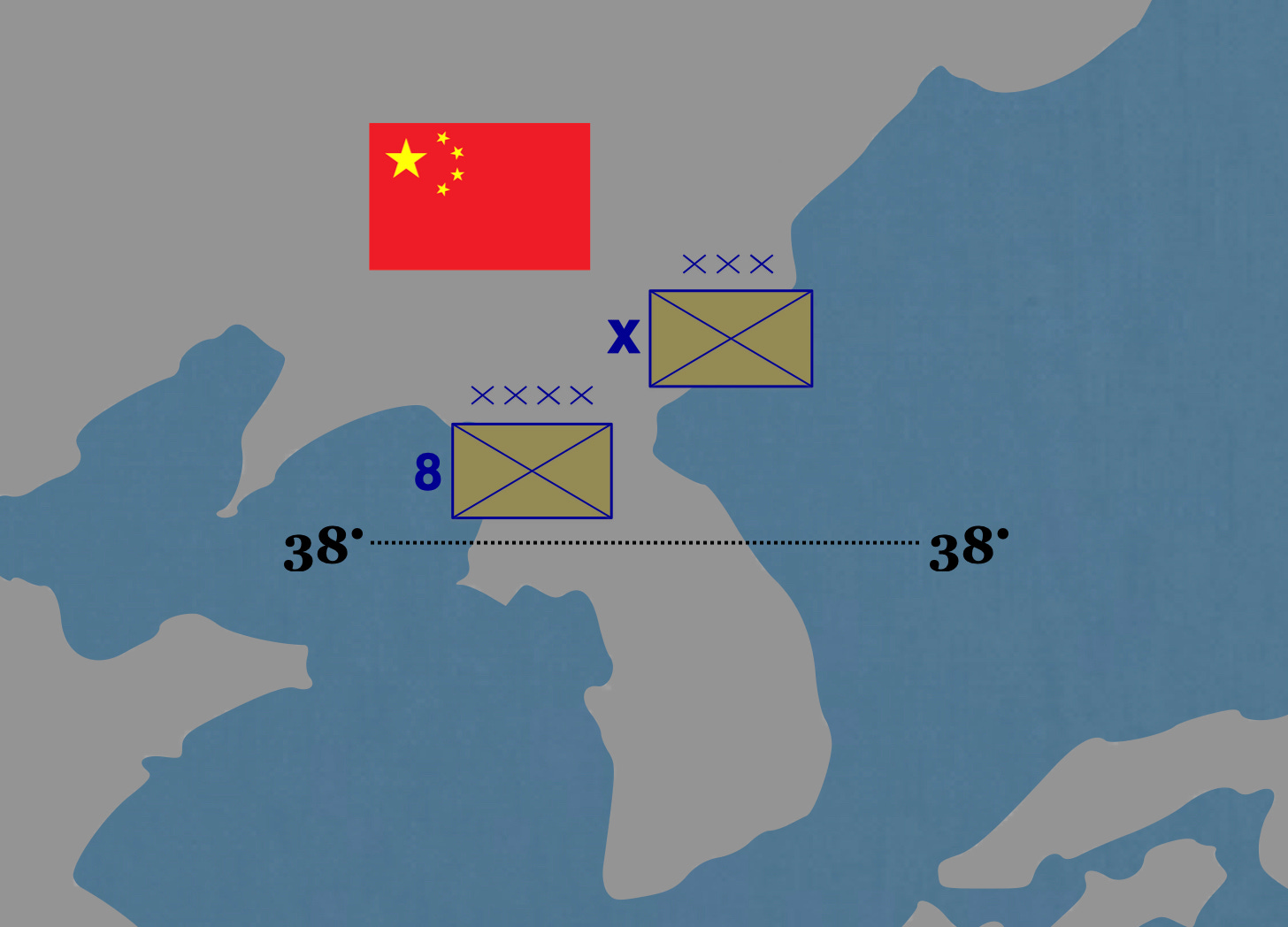
The road that connects your headquarters at Hamhung to the nearest point on the 38th Parallel runs for 275 kilometers (164 miles). However, to reach Hamhung, your most distant division will have to march an additional 420 kilometers (252 miles).
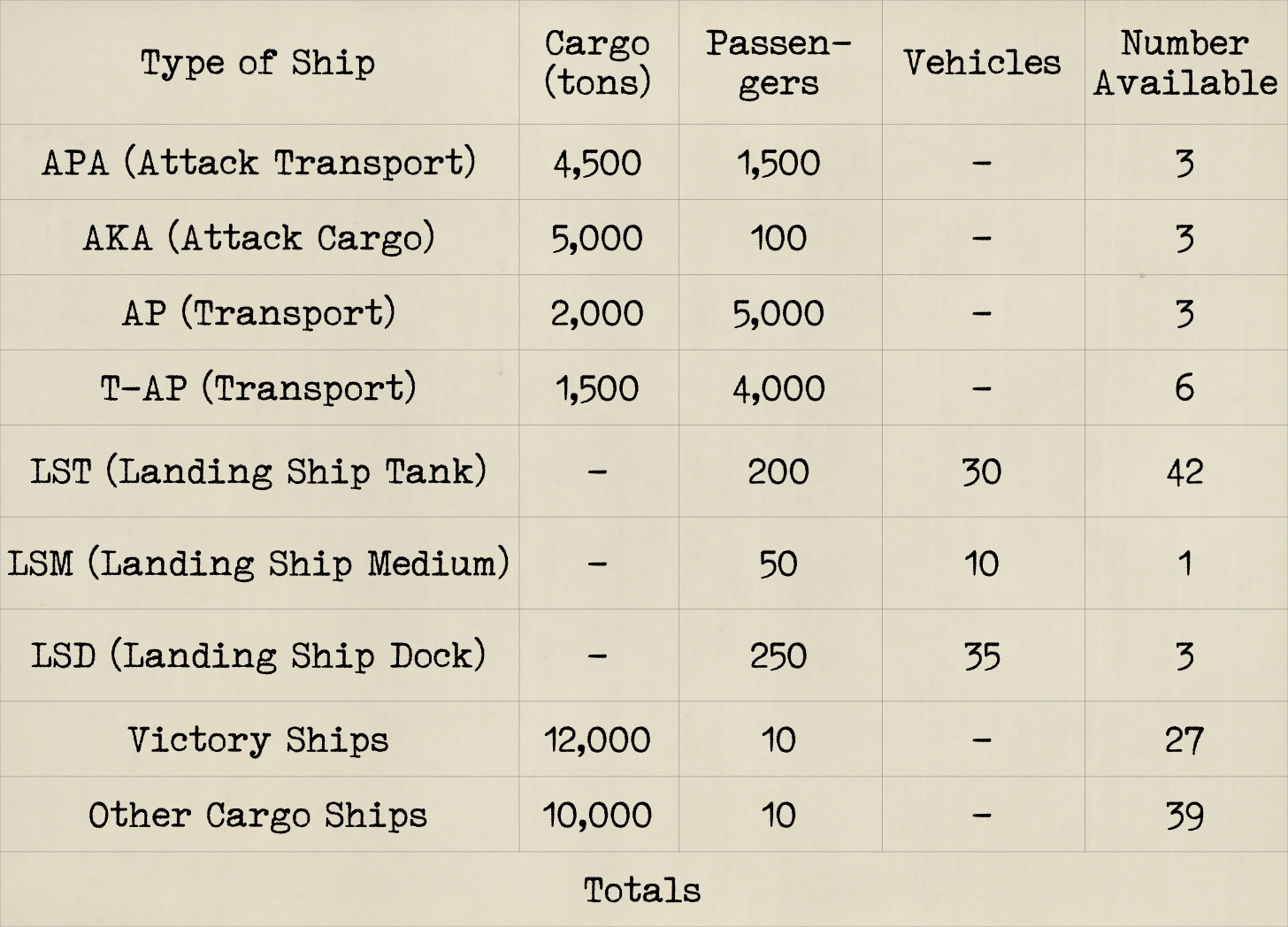
The naval forces of the United Nations Command has placed a number of cargo ships at your disposal. (Nearly all of these were built in the United States during the Second World War. Of these, however, many spent the last few years in the inventories of Japanese shipping companies.)
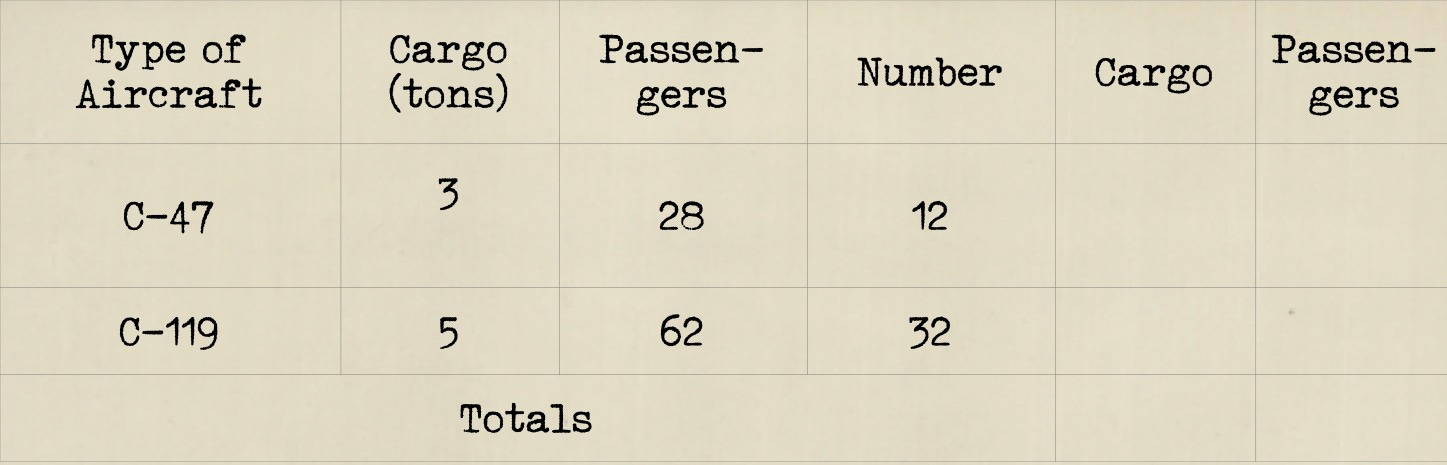
The air forces of the United Nations Command provided the following sorties.
(This link, to a page on the Military Learning Library, will take you a downloadable worksheet designed to facilitate your calculations.)
With these things in mind …
What now, Lieutenant General?
In keeping with the traditions of The Tactical Notebook, I invite readers able to use our comments section to employ that feature to offer solutions of their own.

