

The Anti-Tank Company
The K-Series Infantry Regiment

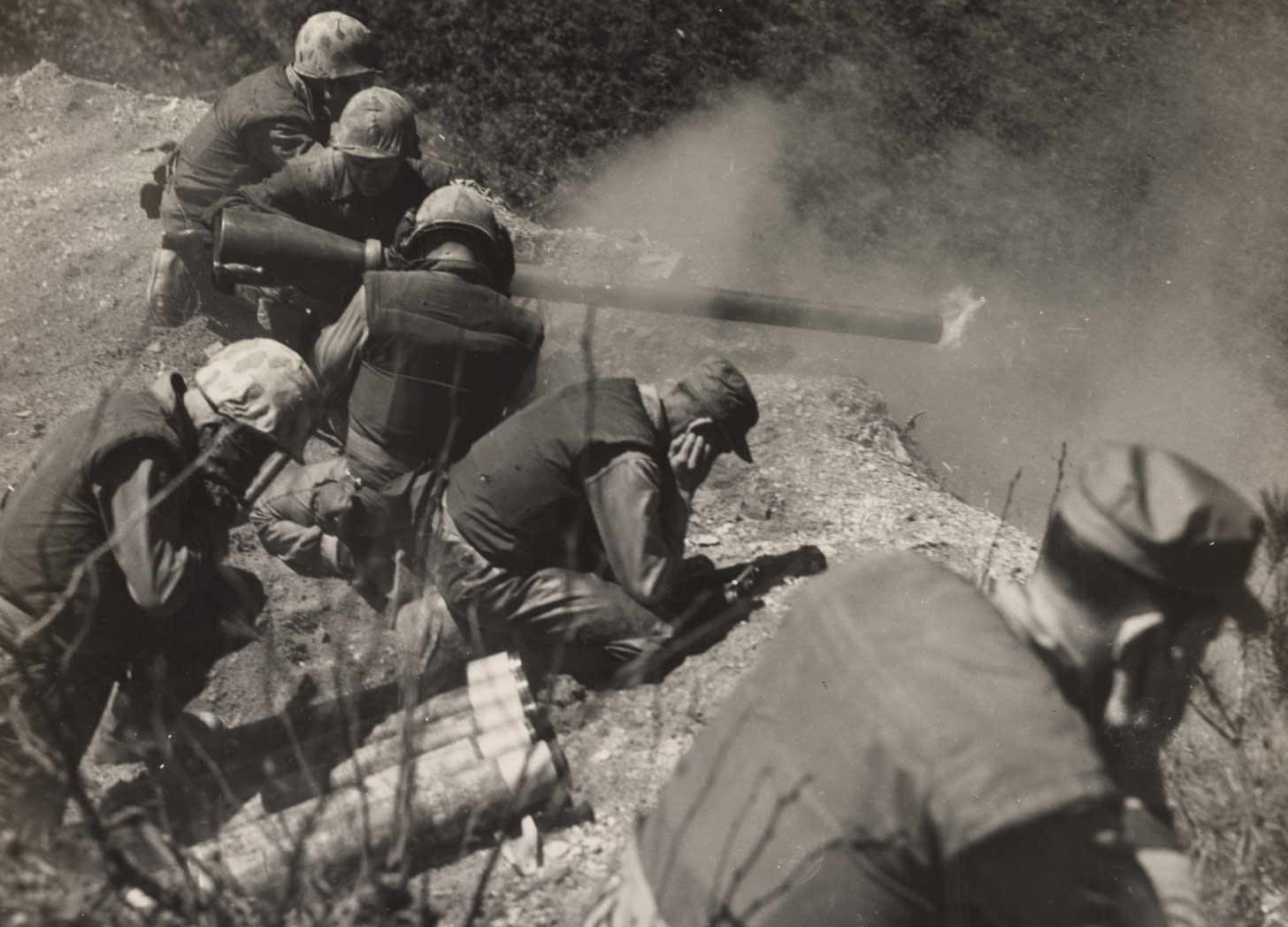
For most of the Second World War, the weapons company of the Marine infantry regiment sported ordnance (towed 37mm guns and self-propelled 75mm pieces) that the US Army of 1942 and 1943 used to shoot at tanks. Nonetheless, the authors of establishments resisted the temptation to designate the unit as an anti-tank outfit. Indeed, at the very end of the war, the replacement of the upgraded ‘French 75s’ mounted on half-track carriers with 105mm howitzers reminded all concerned that the regimental weapons company had been designed to fulfill a multitude of missions.
By 1949, the architects of the Fleet Marine Force had begun to sing a different tune. Faced with the possibility that Marines of the recently revived infantry regiments might face large numbers of first-class tanks, they decided to split the all-purpose weapons company into two a pair of smaller units – a company armed with 4.2-inch mortars and an anti-tank company.
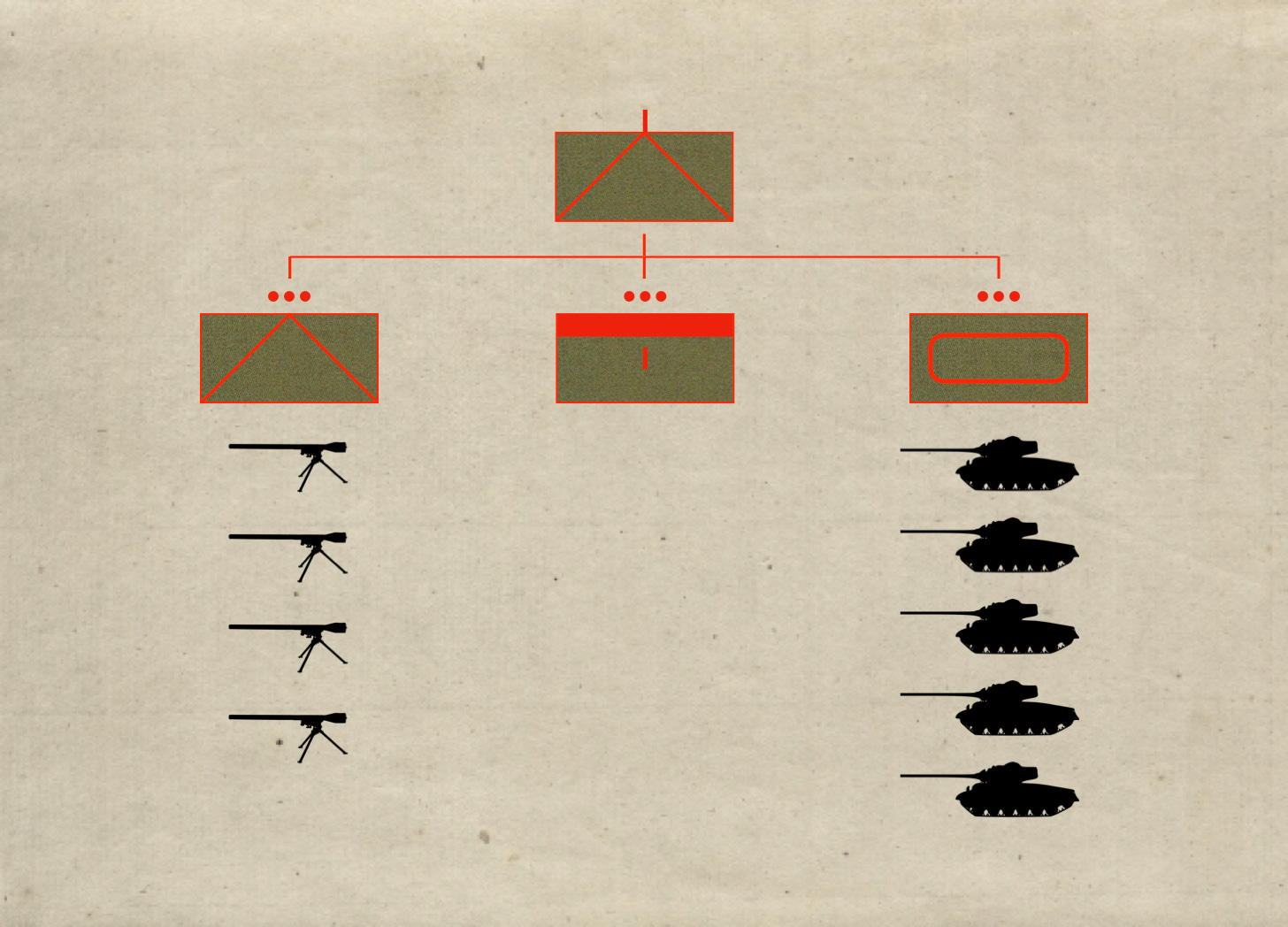
The regimental antitank company formed by this process fielded three platoons – a 29-man tank platoon (with five tanks), a 32-man headquarters, and a 51-man recoilless gun platoon (with four 75mm recoilless rifles).
In keeping with the designation of its parent company, the type of tank rated by the tank platoon, the M-26 Pershing, sported a 90mm gun. Originally designed for shooting at aircraft, this high velocity weapon promised to give Marines the means of dealing with the heavy tanks fielded by the Soviet Army.
Sources
John J. Sayen Battalion: An Organizational Study of United States Infantry (unpublished manuscript) Appendix 7
Kenneth W. Estes Marines Under Armor: The Marine Corps and the Armored Fighting Vehicle (Annapolis: Naval Institute Press, 2000) Chapter 6
For Further Reading


It’s interesting that the conservative nature of the armed forces so inhibit change. The revelations that we were now in a Cold War meant we needed to get serious about organizing with the right capabilities at the right level.