

Rifle Platoons
Of Marine Rifle Companies (1945-1947, 1949-1953)

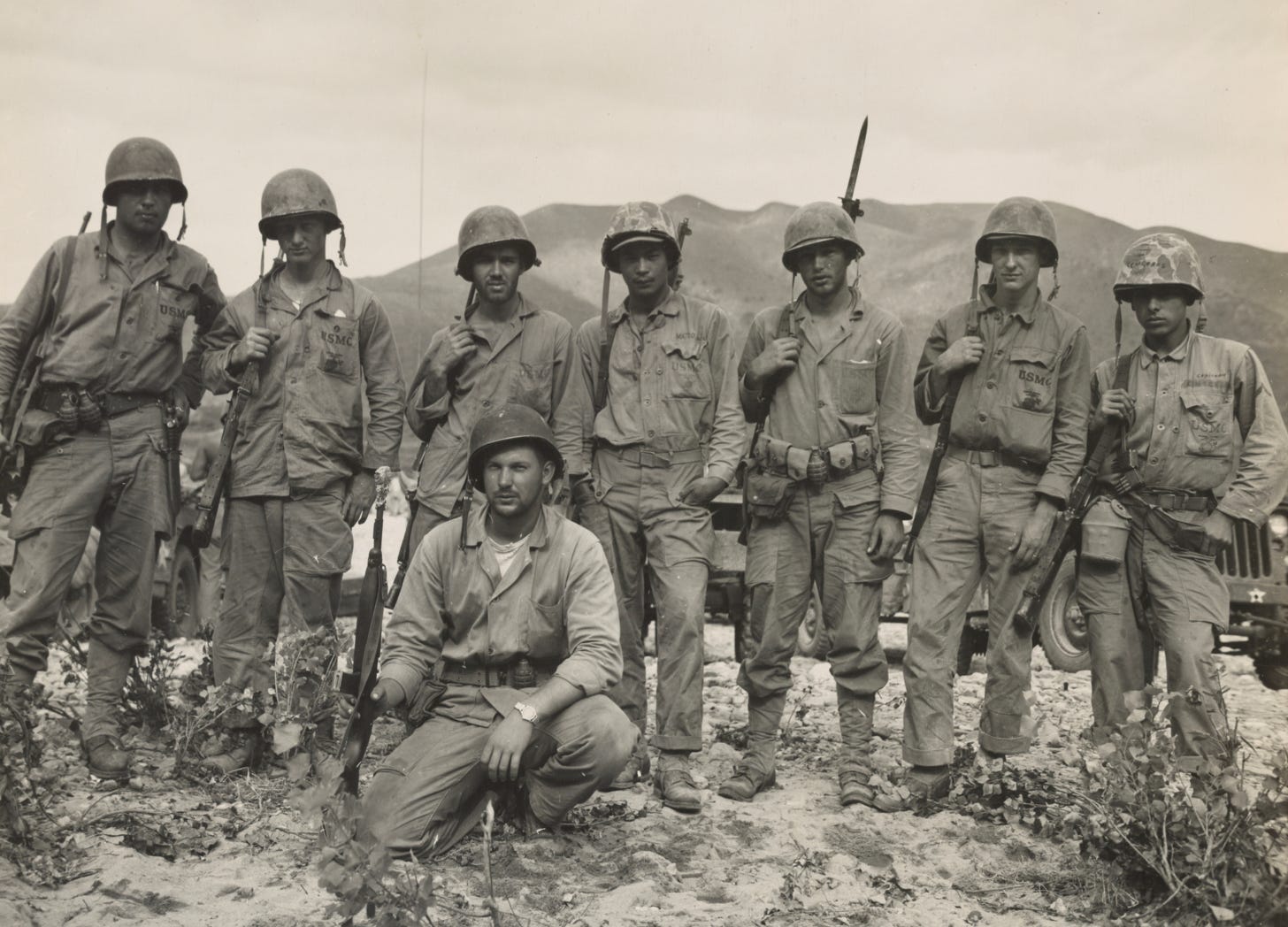
Reduced to a catchphrase, the evolution of the Marine infantry battalion over the course of the Second World War might well be described as a ‘triumph of triangularization’. That is, at three points in time during that conflict, the authors of establishments extended, to a lower echelon of command, the three-part framework already in use in the higher reaches of the hierarchy.
In 1942, the tables of organization of the D Series prescribed a Marine infantry battalion of three rifle companies, each of which was divided into three rifle platoons. On 15 April 1943, the abolition (by the establishments of the E Series) of the fourth (automatic rifle) squad in each rifle platoon turned the latter into a fully triangular organization. Finally, on 12 January 1944, the tables of organization of the F Series completed the process by mandating the trisection of each rifle squad into four-man fire teams.
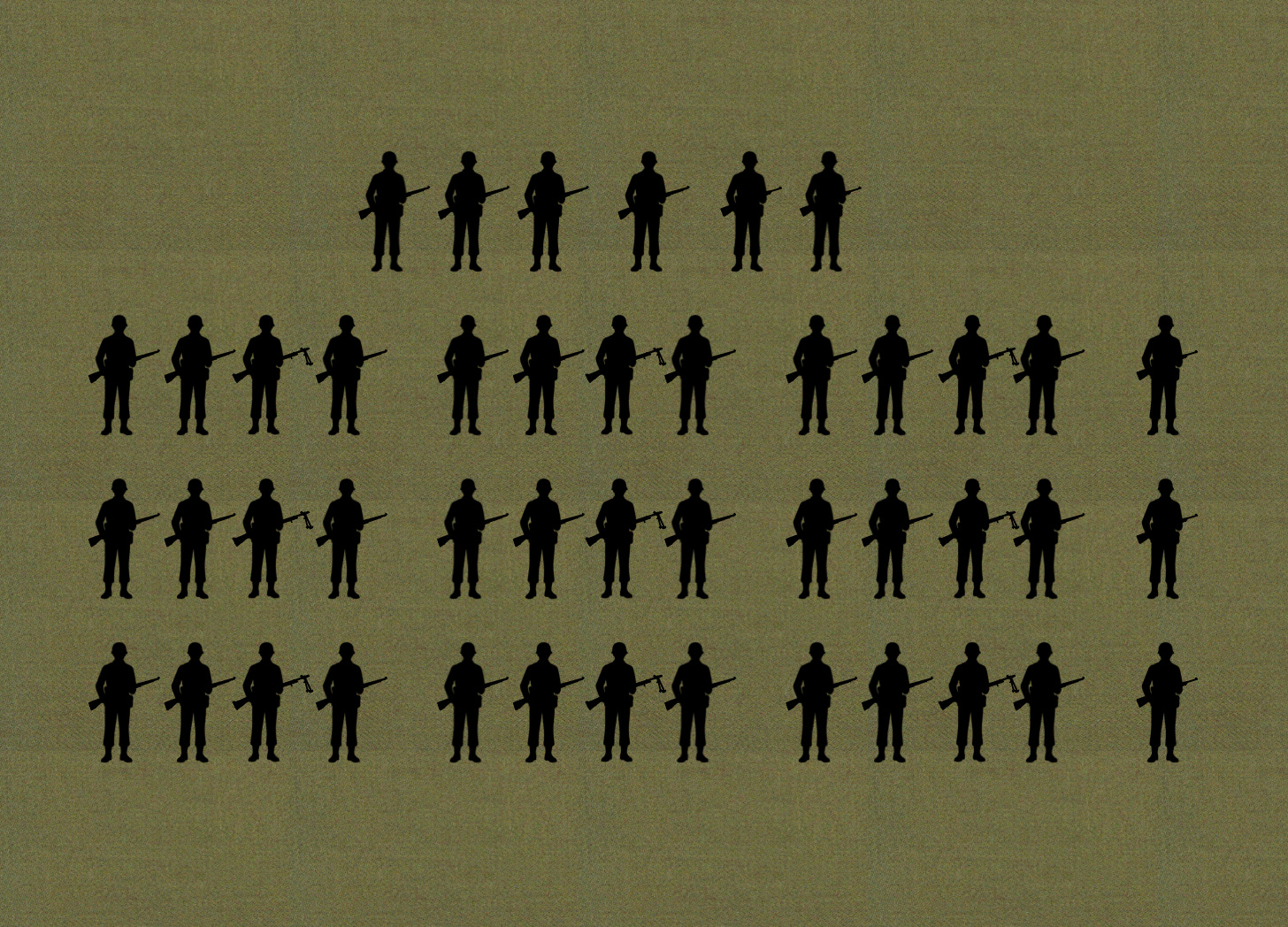
In the decade that followed, the structure of squads remained the same. Likewise, all establishments called for a platoon headquarters that included a platoon leader, a platoon sergeant, a guide, and three messengers. (Ranking as a sergeant, the guide served as the principle assistant of the platoon sergeant. As such, he often took charge of ammunition supply, the delivery of rations, the evacuation of casualties, and the escort of prisoners.)
Between March of 1944 and May of 1945, the F Series of establishments provided the headquarters of each rifle platoon with a corporal who specialized in placement of explosive charges. However, when the G Series tables of organization provided each Marine infantry battalion with a complete assault platoon, the demolitions experts found new homes in outfits of the latter sort.
Sources
‘The New FMF’ The Marine Corps Gazette (May 1947) pages 10-14 (Internet Archive)
‘The FMF Gets a New T/O’ Leatherneck (October 1949) pages 38-39 (Internet Archive)
John J. Sayen Battalion: An Organizational Study of United States Infantry (unpublished manuscript) Appendices 5 and 7
For Further Reading

