

Open Ground (May 1918)
Diary of a Stosstrupp Leader (Part 52)

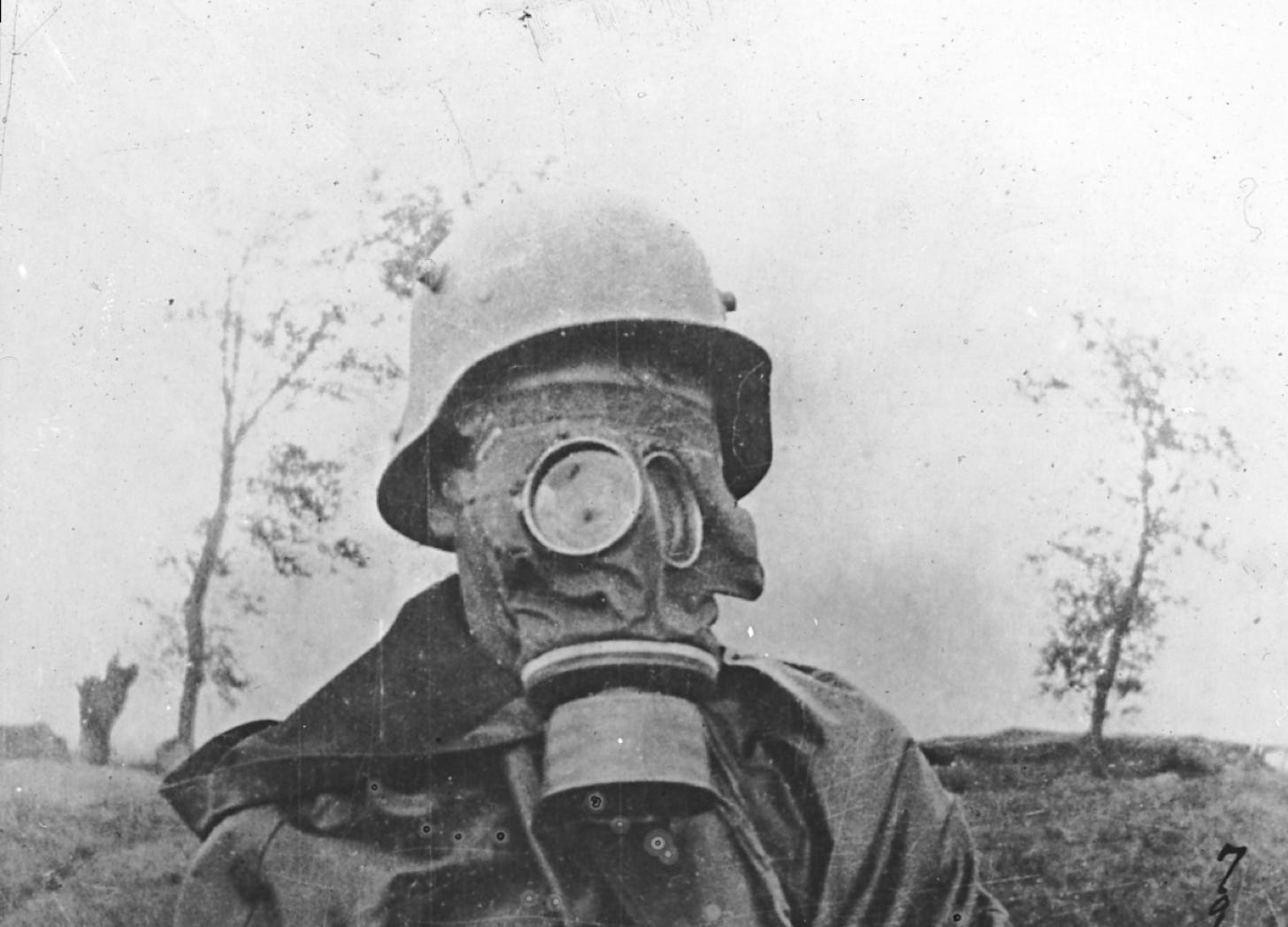
This post continues the translation of the diary of a German soldier who fought in the First World War. Readers can find links to other installments in this series in the following guide.

16 May 1918
At midnight, I/97 (1st Battalion, 97th Infantry Regiment) marched from Marcelcave into the forward position. The headquarters of the commander of the battle battalion (the commanding officer of I/97) was located in a shell crater.
The ground was entirely flat. It lay in full view of the enemy and was entirely covered by his machine guns. If we tried to move during daylight, we ran the risk of betraying the location of our command post. Our companies lay in short stretches of trench, shell holes, and small bunkers some 350 meters in front of us.
17 May 1918
The British artillery shelled us all day. I could not wait for the sun to set.
At midnight, the some ration carriers showed up. Yesterday, their predecessors fell prey to artillery fire, and neither we nor our men got anything to eat or drink.
The captain (the battalion commander) and I visited our companies. The smell of corpses was everywhere.
At night, especially strong enemy fire fell around us. The troops in front of us suffered greatly from it.
Each company could only muster twenty-five to thirty men, but each of the survivors proved willing to do his duty until the bitter end.
18 May 1918
Between two and five in the morning, the British gassed all of the terrain we occupied. Gas filled our command post. As a rule, our gas masks protected us. At dawn, the gas shells stopped falling, so we were able to take off our gas masks.
Just before noon, two heavy shells exploded near us and threw a great deal of earth into our hole.
The weather was clear and sunny. We prayed ‘Lord, let evening come!’ All day, we sat in our narrow hole, waiting for the darkness that would let us move again.
The smells we smelled at night left much to be desired. At least one was not obliged to remain seated in a narrow shell hole, in order to avoid being seen by enemies surveilling the flat ground.
When the enemy fired, he hit us with surprise volleys of shells punctuated with short pauses. Nonetheless, those of us who occupied the command post worked feverishly. Messengers from the companies brought reports of, among other things, the losses suffered during the day.
We reduced these reports to three numbers:
Officers lost
NCOs lost
Rank-and-file lost
Thus, a report might look like ‘2/97 1/3/15’. These short messages spoke volumes!
It hurt my heart to think of the way that our men were torn apart and ripped up by artillery and machine gun fire without being able to reply. But I had no time to ponder such things.
Each time I received a message, I needed to make a quick, but well-considered, decision and write out an order for the messenger to take back to his company. In cases where a company lost its last officer, I had to find a replacement. At other times, I had to transfer a squad from one company to another. When a messenger from the regimental headquarters arrived, I had to process and execute it. Thus, for example, orders from on high required me to do things like adjust the boundaries of our battle battalions.
All of this had to be accomplished, in pitch-black darkness, before dawn.
I had to read and write messages and orders with the aid of a pocket flashlight in a shell hole covered with a shelter half, while enemy shells fell around us. Sometimes, poison gas lay so heavily upon the ground that we had to do this while wearing our gas masks, which made our tasks even more difficult.
Our precious hours of darkness passed quickly. At dawn, we all disappeared into our narrow holes.
to be continued …
Sources
The text comes from Alwin Lyding Meine Kriegstagbuch (My War Diary), an unpublished manuscript that I found at the Bundesarchiv (German Federal Archive) (Folder N 382/1).
Related Reading

