


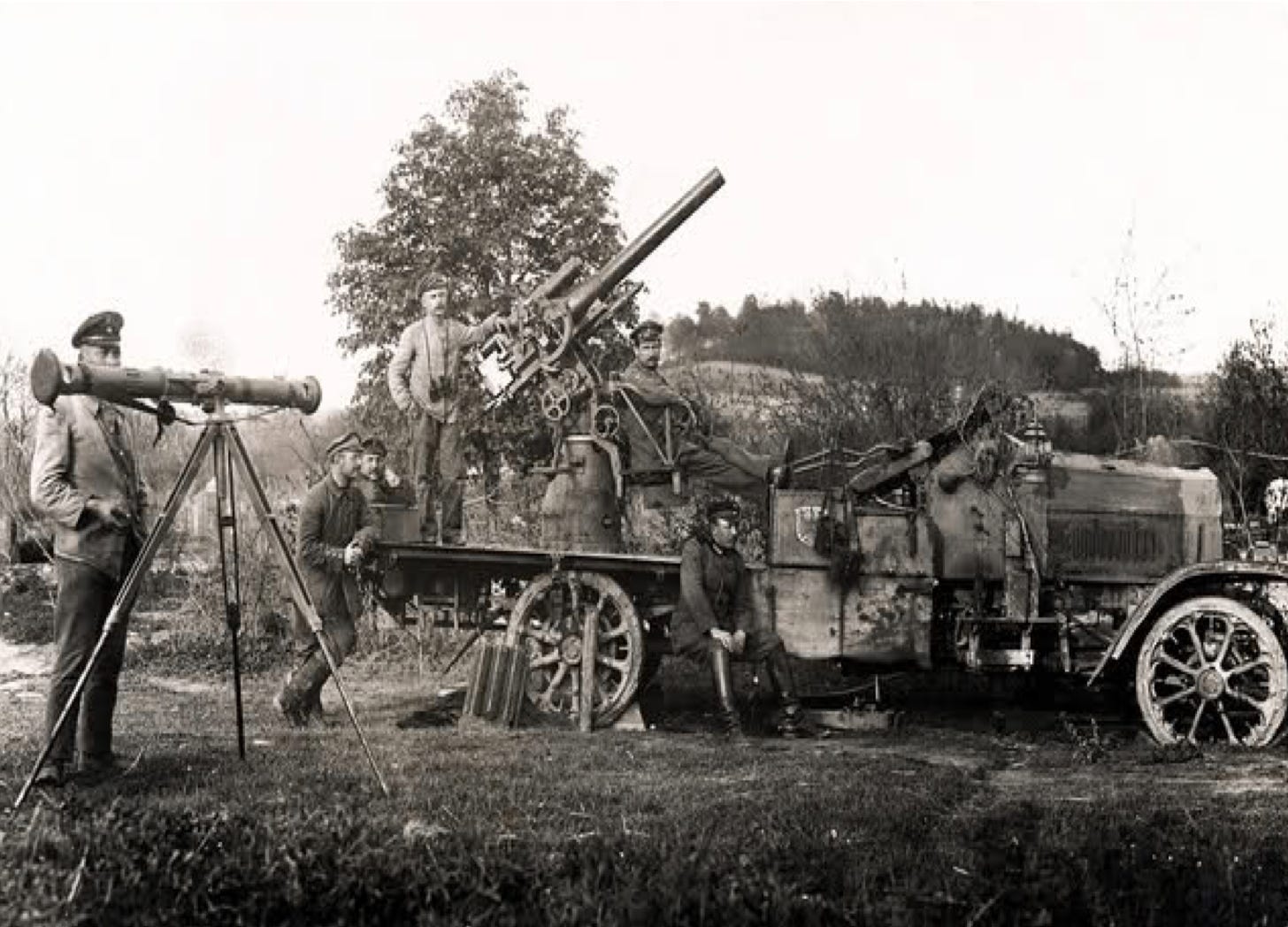
In the autumn of 1916, Gustav Ponath commanded the machine gun company of Sturmtruppe Picht, a motor-mounted, reinforced battalion sent out to seize an important defile in the Transylvanian Alps. Early in 1933, he wrote an article about this expedition for the premier military newspaper of interwar Germany, the Militär Wochenblatt.
While I have not been able to obtain a copy of the original article, I did find a translation that appeared, in June of 1933, in the Quarterly Review of Military Literature. Published by the Command and General Staff School Press, at Fort Leavenworth Kanas, the Quarterly Review of Military Literature would, in the fullness of time, become today’s Military Review.
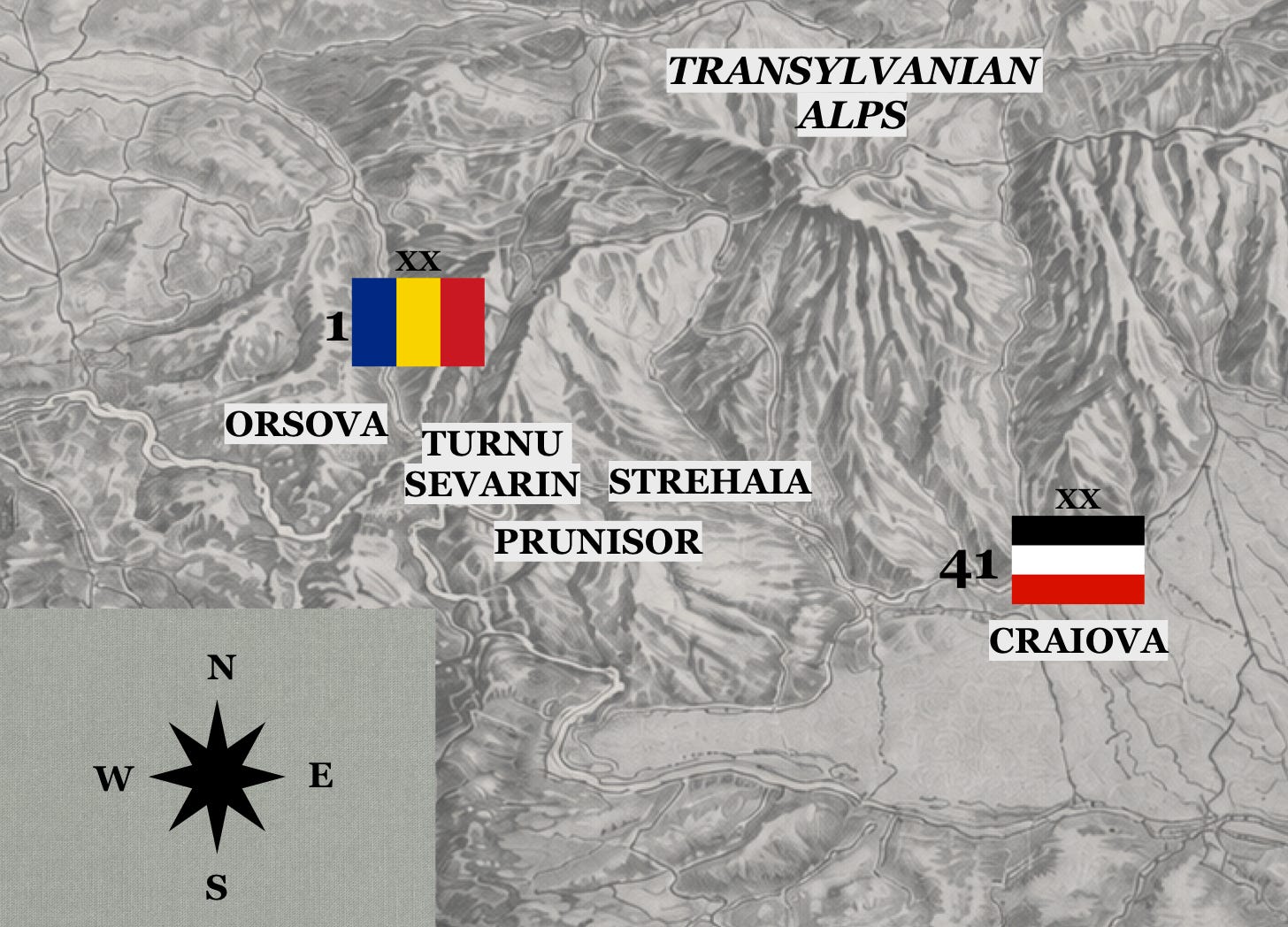
In the middle of November 1916, after the breakthrough of the Transylvanian Alps, the German Ninth Army of General von Falkenhayn was advancing victoriously through Wallachia. Its right wing, the 41st Division, was nearing Craiova while a whole Romanian division continued to block the Danube and railway at the ‘iron gate’ of Orsova.
The opening of this defile was a matter of life and death for the supply of the army. Therefore the General von Falkenhayn decided to intrust this mission to a small independent detachment. This meant for it, and its leader, great responsibility, daring, and judgement. It was one of the few opportunities ever granted to a reinforced battalion to operate independently.
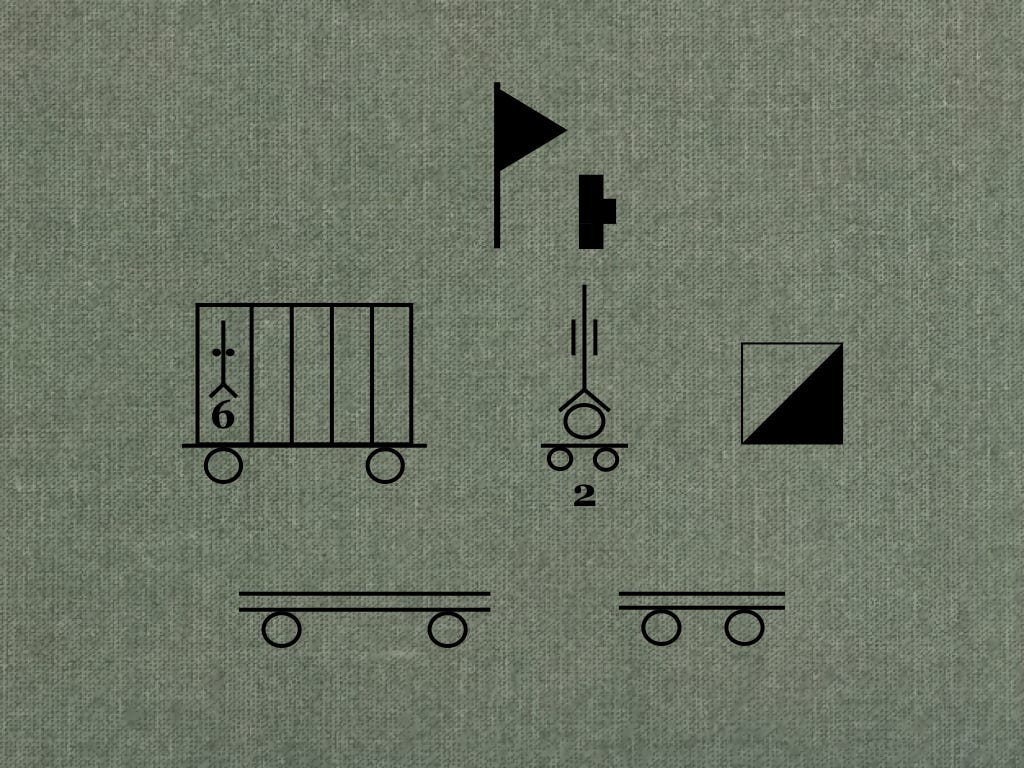
At dawn, 20 November 1916, the detachment was assembled north of Filiasul. Commanded by Captain Picht, it consisted of the 1st Battalion, 148th Infantry; two truck-borne anti-aircraft guns of the 1st Battery, 79th Field Artillery; one-third of an ammunition train of the 79th Field Artillery; one officers’ patrol of the 10th Dragoons; parts of the motor transport unit of the 41st Infantry Division; and one radio detachment. It marched in the direction of Turnu Severin, towards the rear of the 1st Romanian Division.
This division on the Cerna River at Orsova was blocking the ‘iron door’ and the Danube crossing against the Austro-Hungarian troops of Colonel von Svico. The advance continued smoothly. The troops on trucks sped ahead to the west towards Strehaia.
At Prunisor, one of our translators succeeded in cutting in on the postal telephone line and intercepting enemy information. He overheard Romanian cavalry make the following report: ‘Prunisor clear of the enemy.’ At that very moment, we reached that town.
A bit later the enemy changed his tune. The telephone announced: ‘one enemy cavalry division reinforced by infantry, artillery, and armored cars [our truck column!] in march.’ Did this mean us? Finally the Romanian commandant of Turnu Severin, Lagerstroh, alerts the garrison. That causes speculation.
On 22 November 1916, we learn a lot more about the enemy. The detachment nears the girdle of forts at Turnu Severin. At the Balota railroad station the translator learns from the postal wire of the advance of Romanian infantry, three militia companies with two guns, from Turnu Severin toward the mountain defile at Simian. A race ensues for this place.
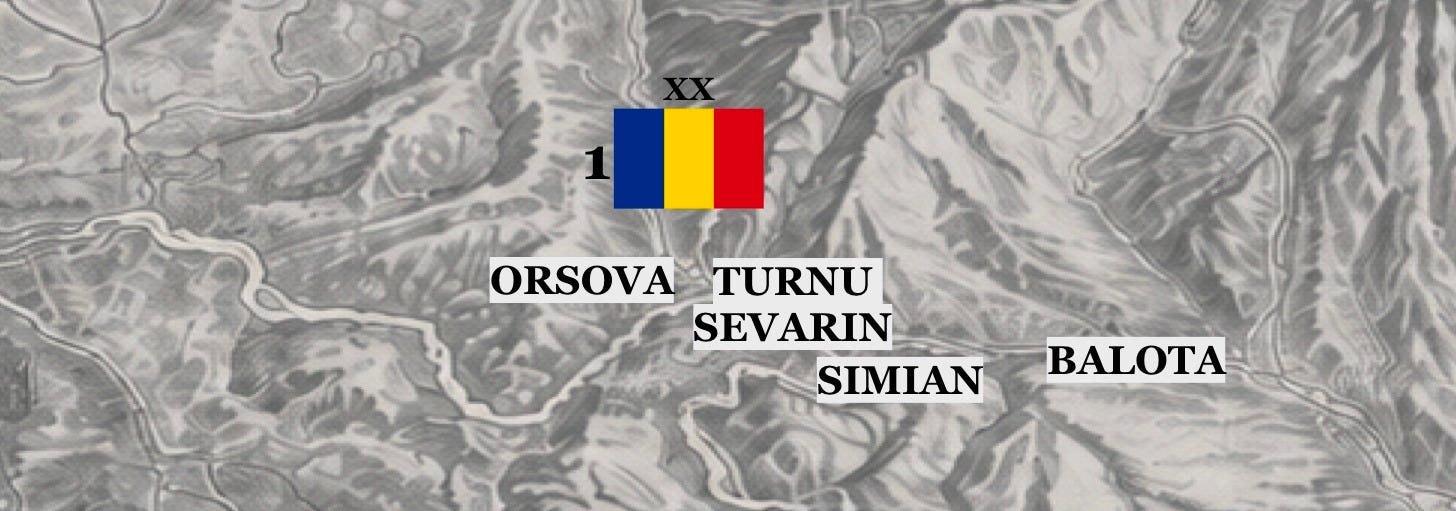
Then the detachment runs into the west fortress, 10 km east of Turnu Severin. It is occupied, but fronts on the Danube opposite the Bulgarian bank. It is captured in hot haste; two Romanian officers and a hundred and thirty men are made prisoners. The prisoners are quickly disarmed and incorporated in the march column. There is not time to bother with them.
It is now pitch dark. The detachment falls out on the highway. A wagon appears before the 1st Company. It does not halt when ordered to. It is fired on. At once a gale of fire breaks loose from the village of Simian. It is the Romanian reinforcement from Turnu Severin. Simian is charged with the bayonet and the two or three enemy companies are dispersed. Two machine guns and sixty-five prisoners are captured and the advance on Turnu Severin continues.
At 8:00 P.M. the detachment enters the town in close order. It seems entirely deserted. The chief authorities are summoned and held as hostages in the city hall. It sounds like a fairytale: a German force of four hundred men in rear of a Romanian combat division, on their sole route of communications, in a hostile city of 24,000 population, and without information or means of reconnaissance.
In the marketplace Captain Picht organizes the companies for defense of the city. Three companies, each with a [two-gun] machine-gun platoon, are distributed to three sides of the city. The fourth side is protected by the broad Danube. The remaining company remains in the marketplace as reserve. At the jail, Austrian prisoners are released, equipped with captured guns, and constituted as the last reserve.
The populace, wakened from their sleep, believe we are Bulgarians of whom they are deathly afraid. They throw up their hands but are quieted when we tell them we are Prussians.
At dawn, a Romanian column distance of eight hundred meters is seen crossing the wide plains in front of our city. It disperses under our machine-gun fire. All that remains is a pair of guns pulled by oxen. It is the signal for combat.
The 4th Company is engaged with Romanian riflemen on the north front. The enemy advances to the outskirts of the water tower and cemetery. About four Romanian battalions attack the city from east, north, and west to clear their rear. In the east the 17th Romanian Infantry issues from its own barrack to attack the weak 1st Company. From the water tower Romanian machine guns are hammering the 4th Company. It loses six platoon leaders.
To our great surprise the people of the town are sitting on fences and walls watching the drama. When the first one is hit they all run screaming to the cellars. Romanian artillery shoots into the houses. Our two artillery pieces take up the battle against these great odds.
New Romanian columns advance from the north. The 1st Romanian Division from Orsova is approaching. At extreme range my machine guns hammer the closed columns of riders, artillery, infantry. Reinforcements are sought from across the Danube. A Bulgarian lieutenant with two machine guns is ferried at great risk across the stream. That is all.
After the second night of uncertainty, and with ammunition fast disappearing, we experienced the heaviest day of combat, that of 24 November 1916. The entire 1st Romanian division encircles the city. One assault follows another. The assault groups come from the water tower, the cemetery, and the barracks. After intensive artillery fire which disables one of our two guns, new assault waves come on. The last reserve is used, the last round has been issued. Captain Picht calls for assistance. But where is this to come from?
In the afternoon on 24 November 1916 another terrific assault is launched on all our fronts. Our defense breaks down. The machine guns are boiling. There is no one to bring water. There is no way out. Firing and dying is all that goes on. Lance corporals and riflemen take the places of fallen leaders. The last hour has come. The last rounds are husbanded. Wounded remain where they fell. The dead are stripped of ammunition. The one remaining field gun on the north front at the cemetery is now able to fire case shot 100 to 150 meters.
Late in the afternoon suddenly, like salvation from heaven, the Bavarian cyclist brigade of Colonel von Quadt, breaks through the enemy ring from the outside. It tears through the town with two truckloads of ammunition in a storm of enemy fire. It is the saving of Sturmtruppe Picht.
As the third night approaches in the embattled Turnu Severin the depleted companies lie between the houses, dug in at picket fences, and, loaded with ammunition, await the last and most intense effort of the Romanians. The terrain ahead of us swarms with enemy. In the darkness signal rockets break forth. Then the nightly assault breaks loose. The defensive fire roars. Wounded scream ahead of us. Not an enemy gets into the town.
When the noise dies down in the morning of 26 November 1916, we pull ourselves out of the rifle pits. Two paces ahead of my machine gun lies the nearest Romanian and beyond him a long assault wave of dead. The wide terrain before the city is lifeless. The enemy has withdrawn.
A day of rest to collect the tremendous booty, to bury about six-hundred dead, and care for the numerous wounded. On 26 November, the detachment is assigned to the Austro-Hungarian command of Colonel von Svico, whose brigade is pursuing the withdrawing enemy.
As part of and at the head of this unit, Detachment Picht ruthlessly drives the gradually dispersing 1st Romanian Division to the southeast along the north bank of the Danube. The detachment pushes on through Rogava, Cetatea, Bailesti, Piscu, Bureni, Aftumati, giving the enemy no rest. In daily battles his rearguards are overthrown, prisoners and booty captured.
Finally, on 5 December 1916, the enemy sets up a line of resistance on the Alt River. The bridges ahead of him have been demolished in time by the German Ninth Army. He cannot withdraw to the east. Here the detachment captures thirty officers, one thousand seven hundred and seventy men, four artillery pieces, and much material.
On 6 December 1916, on the day of the conquest of Bucharest, there occurs the last act of this heroic combat. In the midst of a hot assault, in a cracking fire fight, suddenly the noise ceases. Bearers of a flag of truce appear at the edge of the village of Tia Mare. To avoid further bloodshed, the remainder of the 1st Romanian Division, including nine staff officers, eighty-two officers, three thousand and six hundred men, seven artillery pieces, four machine guns, eighty vehicles, and a great deal of war material, lays down its arms.
Sources
Gustav Ponath (A. Vollmer, translator) ‘Operation of a Detached Force in Rear of an Army: The Opening of the Iron Gate, Rumania, 1916’ Review of Military Literature (Number 49, June 1933) pages 42-47 (Hathi Trust)
Gustav Ponath Die Geschichte des 5. westpreußischen Infanterie-Regiments Nr. 148 (History of the 5th West Prussian Infantry Regiment Number 148) (Oldenburg i.O., G. Stalling, 1933) pages 265-279 (Württembergische Landesbibliothek)
Bruce Ivar Gudmundsson On Armor (Westport: Praeger, 2004) pages 19-23
Related Reading
