

Interwar Infantry
Standard Squads of American Rifle Platoons

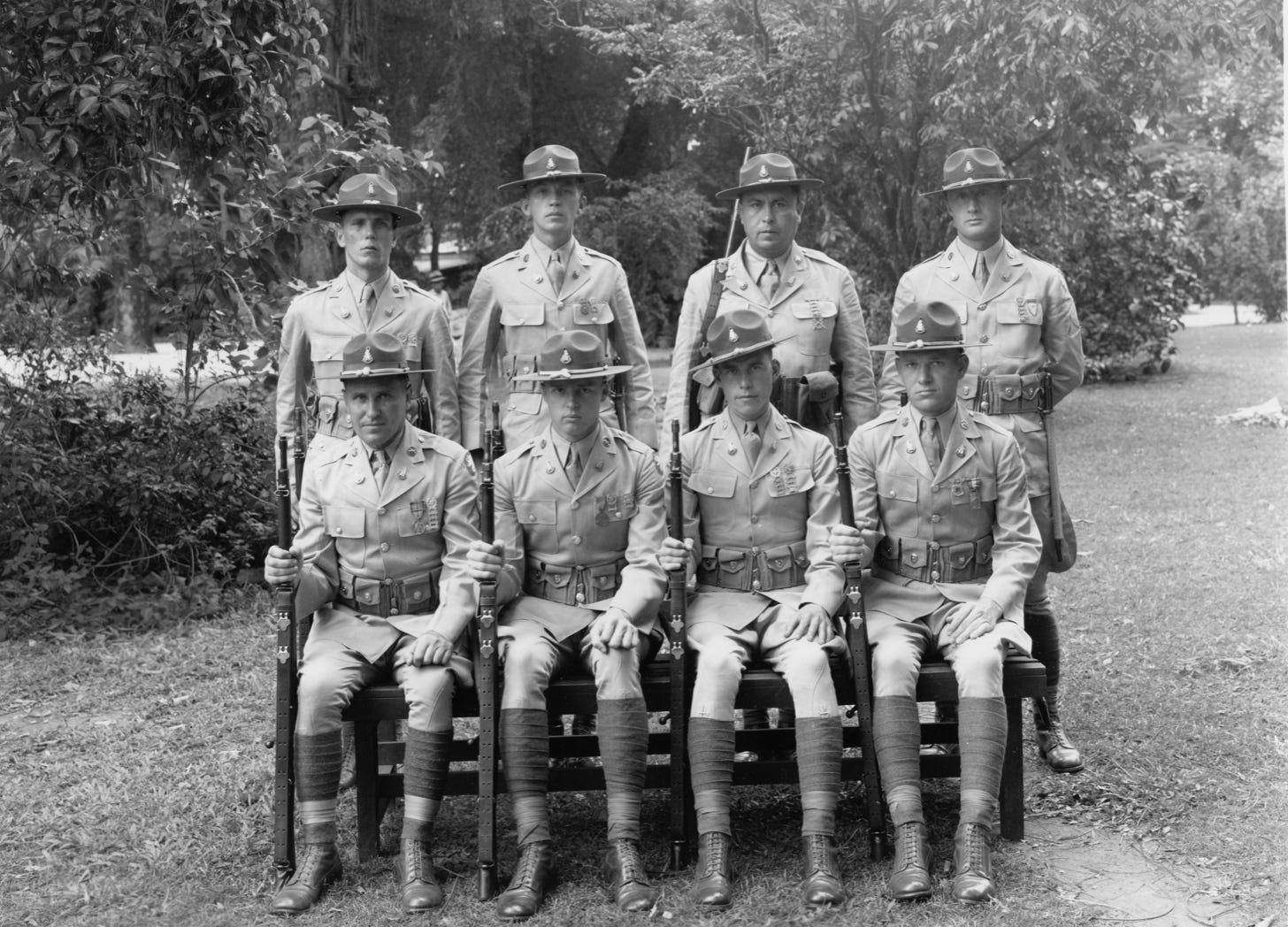
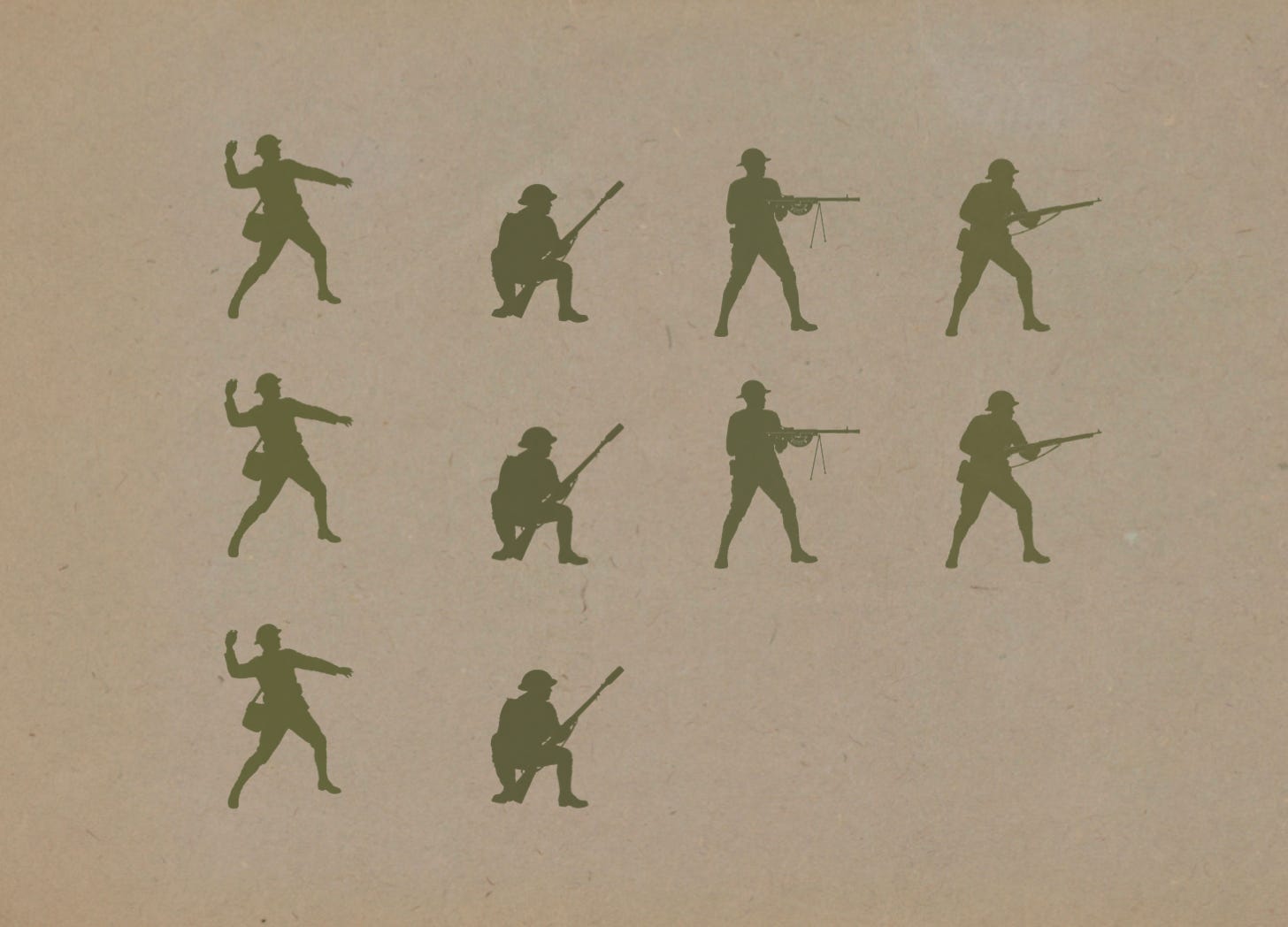
In 1918, the American rifle platoons that fought on the Western Front consisted of:
three four-man hand bomber teams
three three-man rifle grenade teams
two seven-man automatic rifle squads
two eight-man rifle squads
These teams and squads belonged to sections, each of which provided an administrative home for elements of a particular type. Thus, each platoon contained:
a twelve-man hand bomber section
a nine-man rifle grenade section
a fifteen-man automatic rifle section
a seventeen-man rifle section
In the larger sections, the extra man, who ranked as a sergeant, held the billet of section leader. In the smaller sections, the senior team leader performed that role.
Prior to going into action, each platoon shuffled its elements in a way that produced two half platoons, each of which consisted of an ad hoc combination of squads and teams. (As a rule, the leaders led the larger sections took charge of the half platoons.)
Soon after the end of the World War, the organizational architects of both the Army and Marine Corps replaced the four specialized building blocks of rifle platoons with a single type of rifle squad, an all-purpose element that employed all four of the weapons found in the rifle platoons of 1918.