

Foraging
Advice from a young hussar

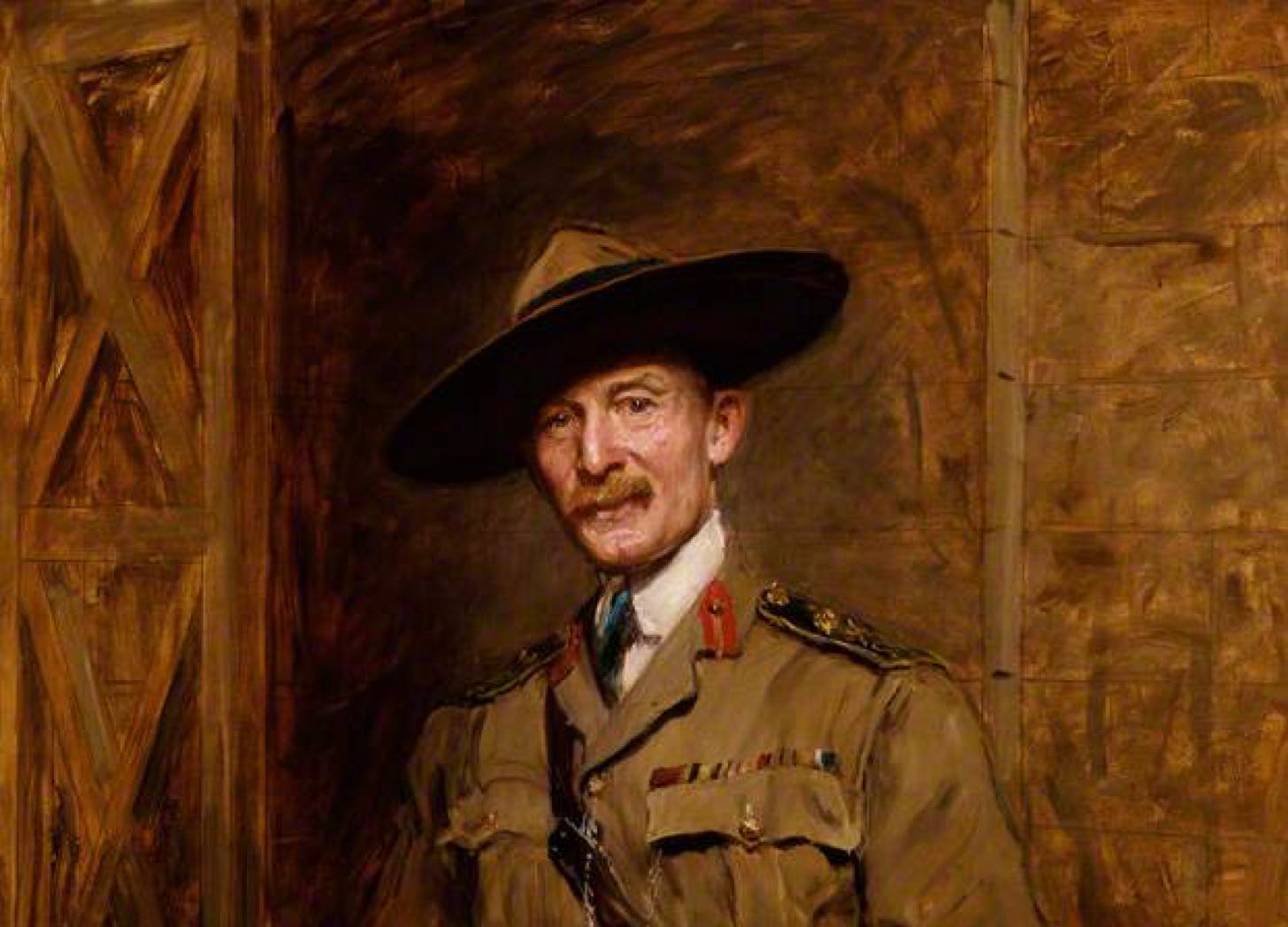
In 1885, Harrison and Sons published Cavalry Instruction. Written by R.S.S. Baden-Powell (1857-1941), a young officer of the 13th Hussars who would later found the Boy Scout movement, it provided practical advice on the art of handling both horses and horse-soldiers on active service.
The following passage from this book reminds us of the time, trouble, and treasure that soldiers of yesteryear devoted to the task of keeping their four-footed friends fit for the fight.
Forage will usually be obtained by purchasing or requisitioning it from the inhabitants. If this cannot be done, it will be necessary to send out a foraging party.
Scouts will first be sent out to discover whereabouts any forage exists. They will then return and lead the foraging party to the place. The party will, on arrival at the spot, be divided into two, one to gather the forage, the other to form outposts and escort for protection against an attack of the enemy.
The foraging must be carried out during daylight. Laborers and wagons, et cetera, should be pressed into the service, but no soldier is allowed to go and help himself to provisions. No inhabitants or passers-by should be allowed to leave the place till the foraging is over, otherwise they might give information to the enemy.
An ‘alarm post’ should be established, to which every man should repair on the ‘alarm’ sounding, leaving the forage behind. If the ‘recall’ only sounds, men will bring in the forage.
Crops can be cut by a line of men with scythes, reaping-hooks, or bill-hooks, or swords, et cetera, a second line in rear of them binding up the cut corn into sheaves.
Provisions should only be taken from the inhabitants by order of the officer commanding as a last resource, when the people refuse to sell them. No individual foraging or plundering is to be allowed of any kind.
An acre of ground (70 yards square) yields from 1 to 3 tons or loads of hay, 50 to 60 bushels, 1,750 pounds of oats, with about 3,000 pounds of its straw, and 8 to 10 tons of potatoes. An ox gives 300 rations, a sheep 45. A wagon carries 600 pounds for every horse pulling it, on average roads. An African mule wagon, 2,500 pounds.
If wagons cannot be obtained to carry away the forage, it must be made into double bundles of 200 pounds in hay-nets, or with head-ropes, and slung over the saddle of each man’s horse, and loaded so as to ride high up, not lower than the bottom of the flap. Small provisions can be placed in sacks or boxes and baskets, and similarly carried. The men then lead their horses back to camp, with mounted flankers and guards protecting their march.
Source
R.S.S. Baden-Powell Cavalry Instruction (London: Harrison and Sons, 1885) (Hathi)
Related Reading
