

End of an Era
The demise of the water-cooled Browning

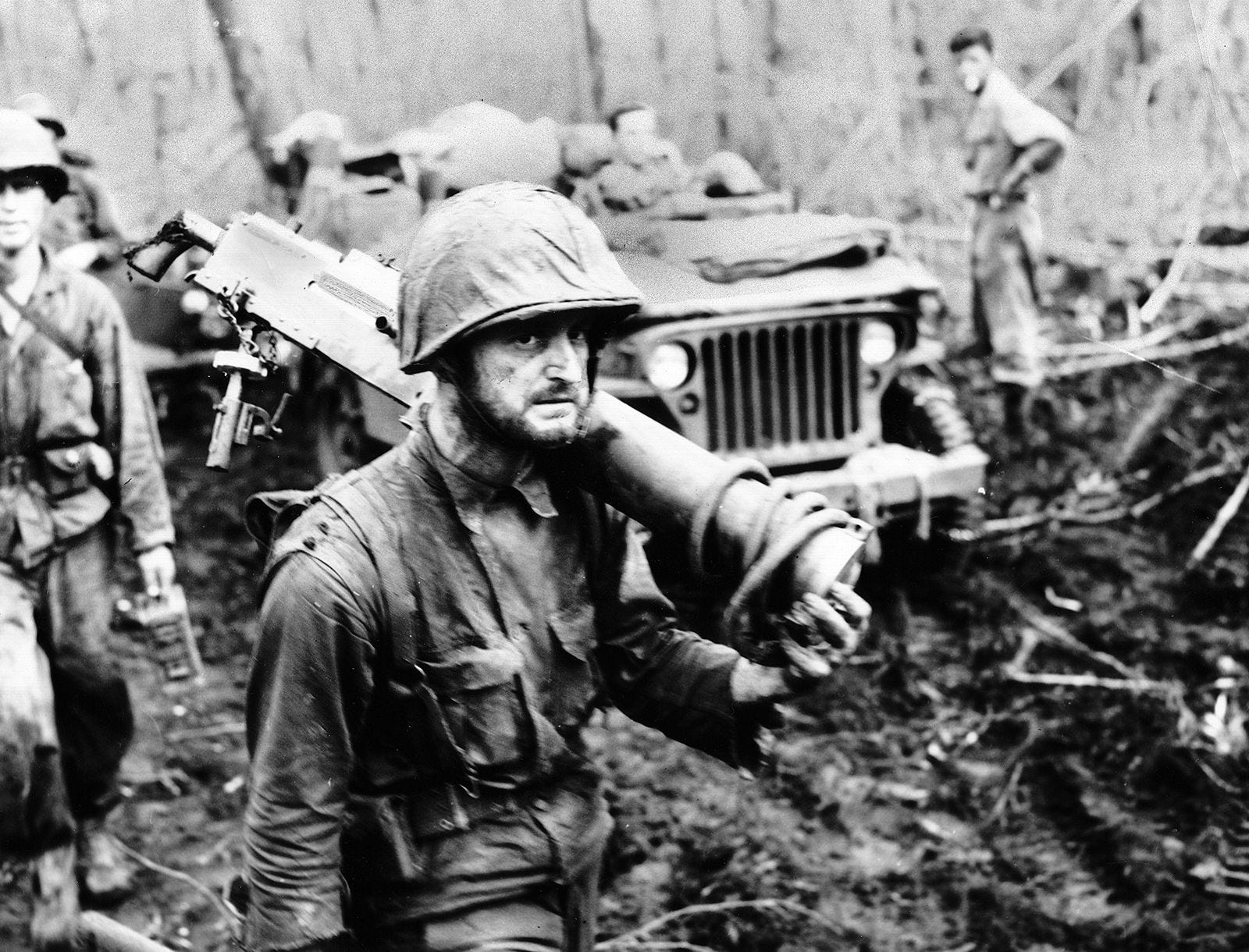
The introduction of new items of equipment sparks the publication of articles that celebrate their virtues and, better yet, explains the thinking behind their adoption. When, however, a piece of kit falls out of use, the journals make little, if any, mention of the reasoning behind its retirement. Indeed, the best that the historian of such things can hope for is a stanza or two of ‘Johnny, we hardly knew ye.’
To be more specific, a search through back issues of Marine Corps Gazette for explanations of the disappearance of the water-cooled .30 caliber machine gun from the establishments adopted in 1957 yields nothing more than brief mentions of that fact. As a result, until I get a chance to consult the used-to-be-a-tree archives, I will have to take an indirect approach to my quest for answers.
This adventure begins with a piece, published in the Leatherneck magazine in January of 1957, that lays down the load carried by the Marines serving in various type so infantry squads. According to the calculations made by the author, Marines who operated water-cooled Brownings carried four more pounds of equipment and supplies than those who employed the air-cooled little brother of that weapon.
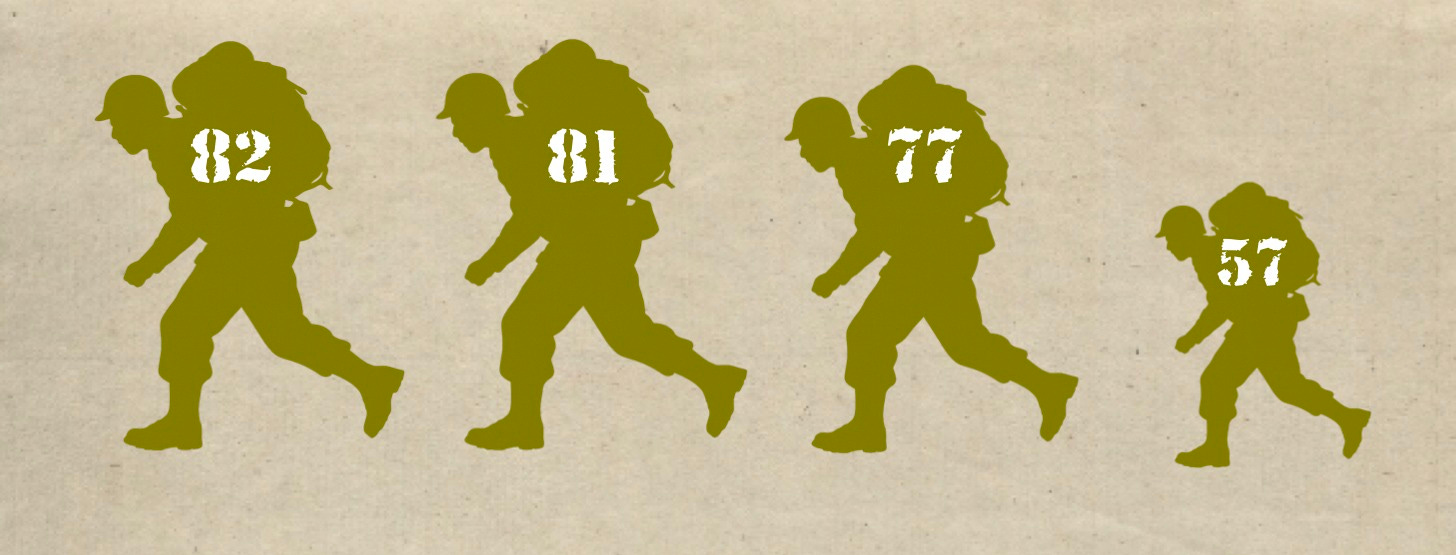
The light machine gun tipped the scales at 46 pounds, the heavy machine gun (to include a full water jacket) 91.75 pounds. In other words, the latter weighed nearly twice as much as the former. However, when this burden (and the weight of a standard load of ammunition) was shared among the members of the eight-man machine gun squad called for by the G, K, and L-Series establishments, the difference amounted to four pounds per man.
The same reform that eliminated the water-cooled Browning, moreover, retained the 81mm mortar, a weapon that placed a comparable burden on the members of its crew. Thus, if the authors of the Provisional Organization of 1957 had had been motivated by a desire to reduce the load carried by foot-sore Marines, they might have retired the latter weapon as well. A better answer comes from another feature of the Provisional Organization: the reduction, from eight to five, of the number of Marines assigned to each machine gun squad.
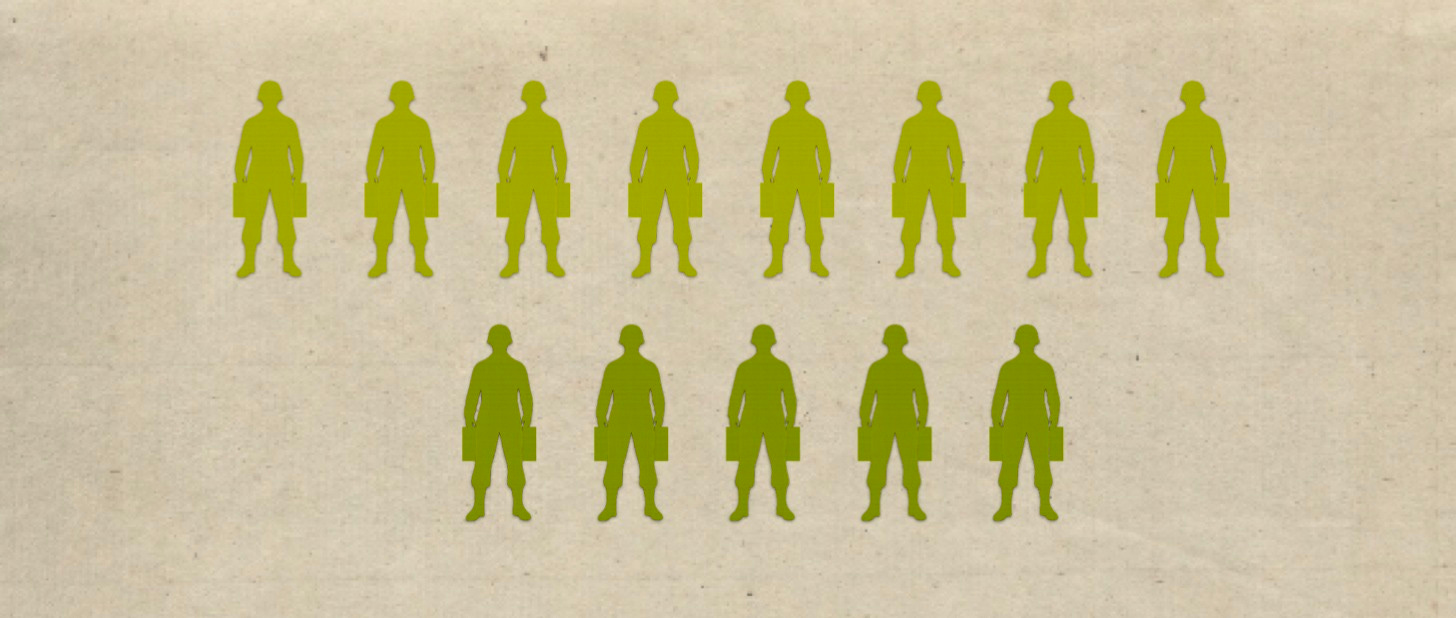
Had the smaller squad been equipped with a heavy Browning, its leader would have been obliged to spread the extra weight of that weapon among a smaller number of people. In other words, the replacement of the water-cooled Browning with its air-cooled kinsman reduced the burden carried by each Marine machine gunner by seven pounds or so.
Sources
Allen G. Mainard ‘The Combat Load’ Leatherneck’ (January 1957) pages 32-33 (Internet Archive)
‘FMF Organization and Composition Board Report: The Division’ Marine Corps Gazette (April 1957) pages 29 and 30 (Internet Archive)
John J. Sayen Battalion: An Organizational Study of United States Infantry (unpublished manuscript) Appendices 7 and 8 (Military Learning Library)
Bruce Ivar Gudmundsson manages the Military Learning Library, a website hosted by Nabble that began its life as a discussion forum.
Related Reading

Mostly a desire to adopt the GPMG a.k.a an MG42.Equivalent, in the US soon to be the M60 GPMG
The Soldier's Load and the Mobility of a Nation by S.L.A. Marshall was published in 1950, what took them so long? (And Marshall was not even the first U.S. author to note this problem!)