

Detonations
Diary of a Stosstrupp Leader (Part 15)

This post continues the translation of the diary of a German soldier who fought in the First World War. Readers can find links to other posts in this series in the following guide.

1 January 1917
We spent the entire day, as we did in the old year, shoveling, scooping, and siphoning. In the evening, my squad leaders and I lit the candles on the Christmas tree and drank grog.
2 January 1917
In the morning, I went to the camp to visit Lieutenant Winter, and, from there, [the quarters of] Lieutenant Camphausen of the Third Battalion [of Infantry Regiment 97] and the delousing station. I was transferred to the 1st Platoon [of the 8th Company]. I visited Feldwebel Lambrecht, returned to the second line and, at noon, at, as usual, ate half of a mess kit full of field kitchen soup.
In the afternoon, until 4:30 PM, Lieutenant Winter, Feldwebel Affler, and I examined the field fortifications of the 1st Platoon.
The Russians seem to have had excellent optical instruments. As I was standing on the edge of a trench by the edge of the woods, a heavy artillery shell screamed over us and landed a few meters behind our location. It must have been of a very large caliber, for a flew slowly, giving us ample warning of its impending arrival. Thus, we were able to jump into the trench [before the shell exploded]. This incident showed that, whatever the newspapers reported, the Russians had sufficient ammunition to take potshots at individuals. (All of the other German soldiers were working in the trenches, and, as a result, remained invisible to the Russians.)
My platoon relieved the 1st Platoon of the 7th Company in Position B II b3.
In the left listening post, we found the remains of a soldier of the 7th Company of Infantry Regiment 97. He had neglected to notice that the pull cord on a hand grenade [he had placed next to him] had frozen to the ground.
[On a German stick grenade of the First World War, the pull cord performed the same function as the pull pin on hand grenades of the pineapple persuasion.]
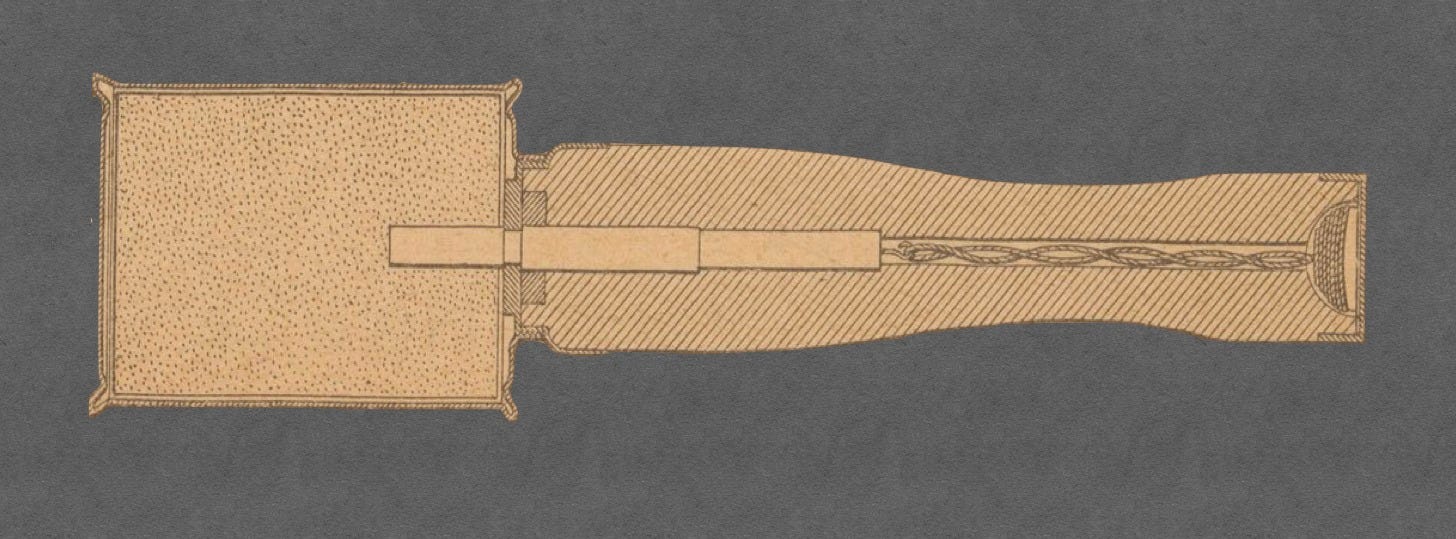
Each day, at dawn, the last sentry of the night was supposed to return the ten hand grenades that had been lying, ready for use, at his post.
[In this case, ‘ready for use’ meant that a portion of the pull cord – which performed the same function as the pull pin on spherical hand grenades - had
However, the pull cord of one, or more, of the grenades was frozen. Thus, when the sentry picked them up, they ignited and detonated all ten of the grenades. The powerful blast that resulted blew the man to pieces. After the sun went down, we recovered his widely scattered remains.
This accident proved to be a bad omen. On the same evening, four of us were wounded – two seriously – by machine gun fire.
4 January 1917
The Russians in front of us differed greatly from those we had encountered when we had previously occupied the same position. It seems that the unit we had faced before had been relieved by an elite unit.
Today, the sentry at the listening post on the far right of our position was killed by a shot through the head.
6 January 1917
The weather is cold, with drifting snow. The night was clear and lit by the moon.
to be continued …
Sources
The text comes from Alwin Lydding Meine Kriegstagbuch (My War Diary), an unpublished manuscript that I found at the Bundesarchiv (German Federal Archive) (Folder N 382/1).
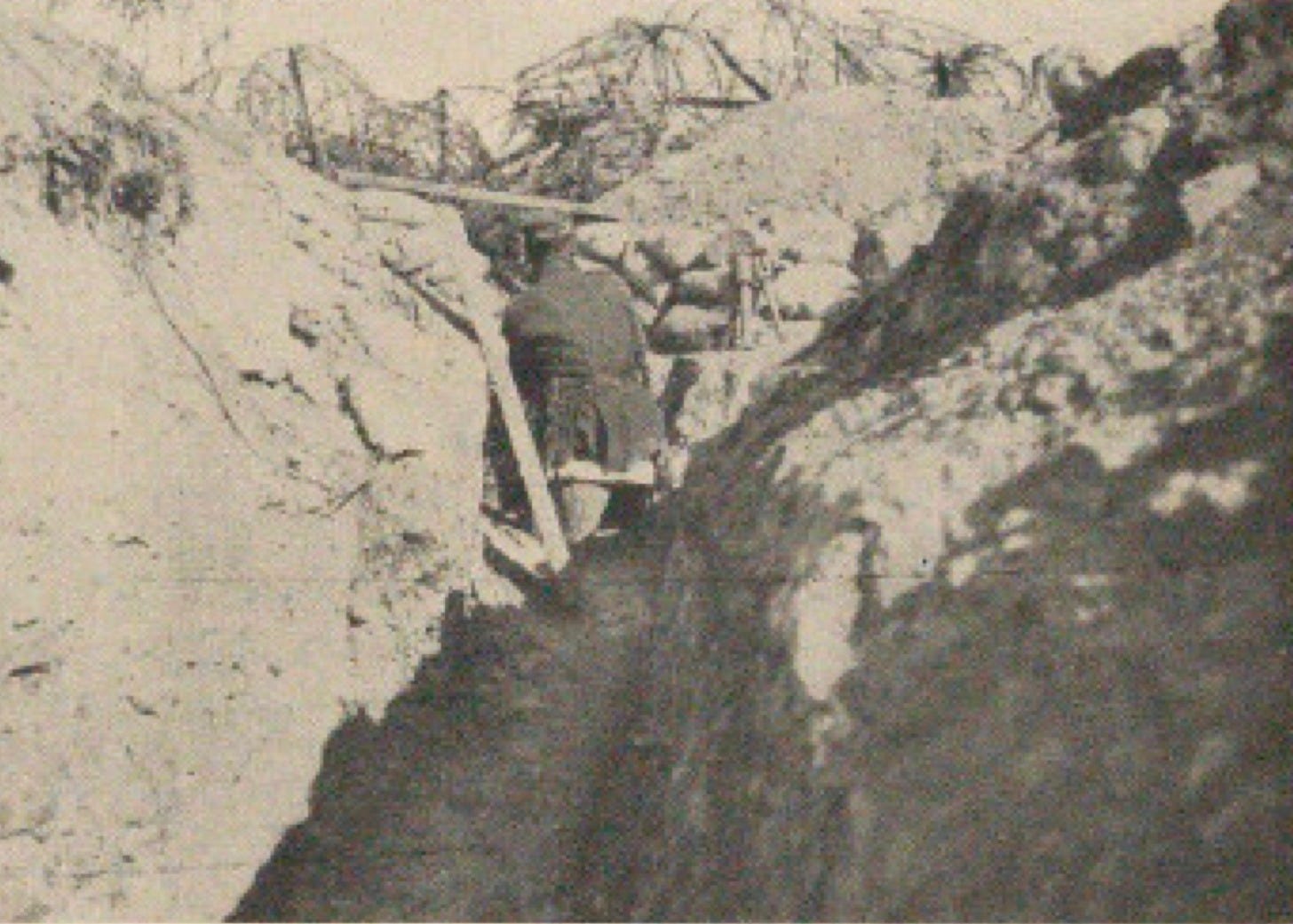
The photo at the top of the page comes from Adolph von Wuffen 1. Oberrheinisches Infanterie-Regiment Nr. 97 (Oldenburg: Gerhard Stalling,1923) (Deutsche Nationalbibliothek)
The diagram of the stick grenade comes from Ministère de l’Armement et des Fabrications de Guerre Notice Succincte sur les Divers Modèles de Grenades Actuellement en Service dans l’Armée Allemande (Paris: Imprimerie Nationale, 1918) page 23 (Gallica)
For Further Reading

As if combat alone was not dangerous enough.
What Russian unit that was elite faced them I wonder?