

Bye, Bye, Browning
Browning Machine Guns in the US Marine Corps

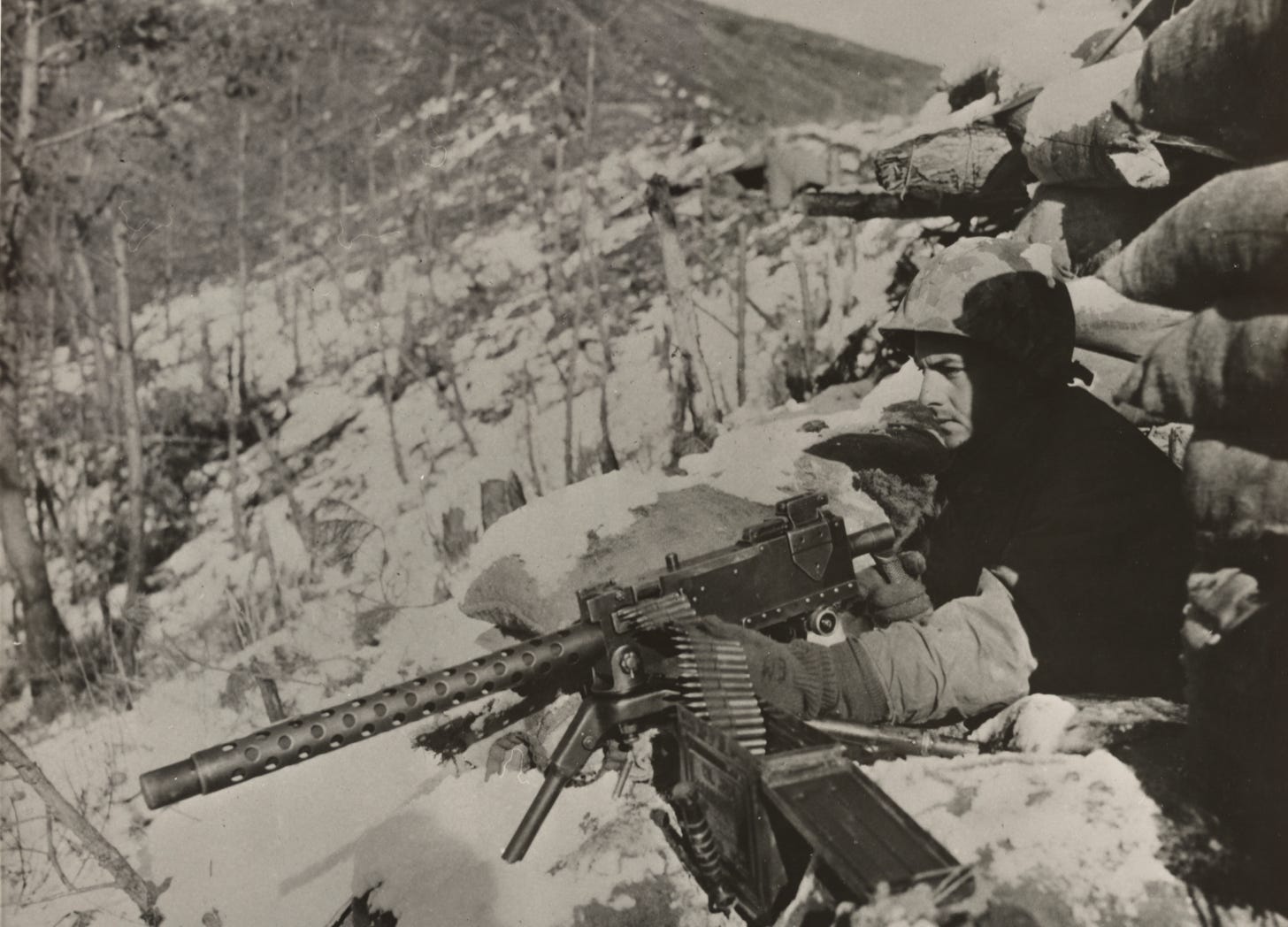
In the years between the two World Wars, the architects of the infantry regiments to be mobilized by the US Marine Corps provided those organizations with a growing number of water-cooled Browning 30. caliber machine guns. These invariably belonged to the ancestors of the weapons companies of infantry battalions, outfits known either as ‘machine gun companies’ or ‘machine gun and howitzer companies’.
On the eve of the formal entry of the United States into the Second World War, the authors of establishments replaced a portion of the water-cooled Brownings (Model 1917A1) with their air-cooled cousins (Model 1919A4). At the same time, they provided rifle companies with machine guns of their own.
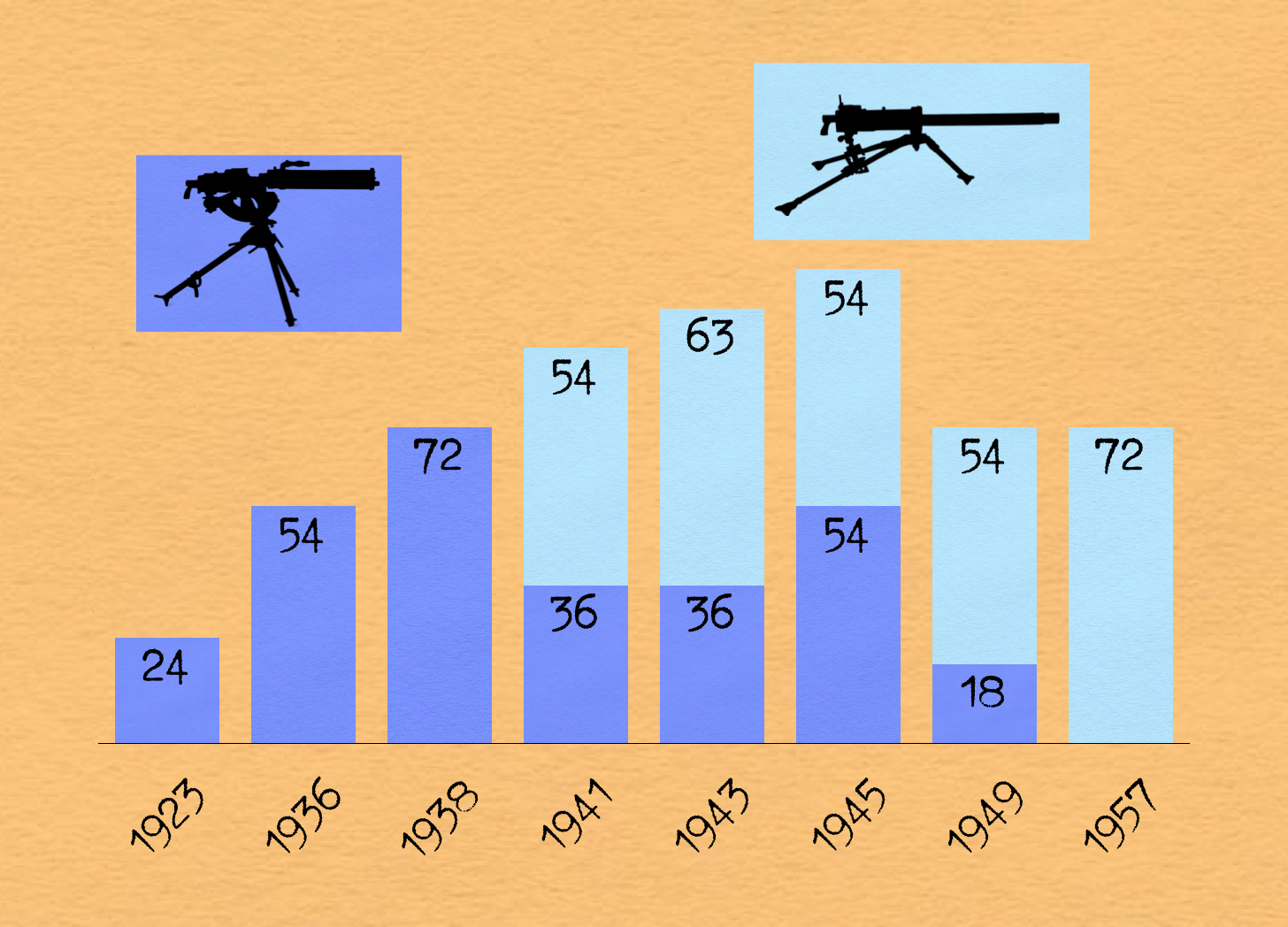
In 1945, the designers of the G-Series tables of organization abolished the weapons companies of infantry battalions. At the same time, they provided each rifle company with the means of employing as many as many as twelve tripod-mounted machine guns at any one time. (Under normal circumstances, the one machine gun platoon of each rifle company carried six air-cooled Brownings. When, however, a rifle company took up a defensive position or took part in a deliberate attack, its machine gun platoon drew six extra tripod-mounted machine guns, all of which were water-cooled Brownings.)
Adopted in 1949, the establishments of the K-Series revived the weapons companies of infantry battalions, thereby adding three additional machine gun platoons to each regiment. Though organized in the same way as the machine gun platoons of rifle companies, the revived battalion-level machine gun platoons received water-cooled Browning .30 caliber weapons rather than the air-cooled variants of that weapon issued to rifle companies.
In the course of adding three extra machine gun platoons, the K-Series put the kibosh on the custom of holding spare machine guns in reserve.
In 1957, the Hogaboom reforms, which optimized infantry regiments (and, indeed, whole Marine divisions) for helicopter transport, swept the water-cooled Browning .30 caliber machine gun into the dustbin of hoplophile history. Thus, between that date and the adoption of the M60 general purpose machine gun, all of the .30 caliber Brownings used by America’s Marines sported air-cooled barrels.
Source
John J. Sayen Battalion: An Organizational Study of United States Infantry Appendices (Military Learning Library)
Related Reading


Note
The title of this post comes from a line in a song about a pistol-packing gangster that Edith Piaf recorded in the 1930s. (YouTube)
All reorganizers are to be transferred to Combat Penal Battalions effective immediately- Signed STAVKA. (Stalin).